2 Samuel 9: Identity and Belonging in Scripture
Bible Teaching, 2Samuel9teaching, identityandbelonginginScripture
Still Lame, Still Loved: A 2 Samuel 9 Teaching on Identity and Belonging
In 2 Samuel 9, we meet a forgotten heir in a forgotten town, a man who calls himself a “dead dog” and a king who goes looking for someone to be kind to. Their meeting offers a tender picture of how God pursues the broken, restores dignity, and gives us a seat at His table—even when our wounds remain. This 2Samuel9teaching is especially close to our heart at Ministry Prayer Life, where we walk with many who feel overlooked, discarded, or permanently disqualified from hope.
The King Who Went Looking for Someone to Be Kind To
2 Samuel 9 opens with a surprising question from King David: “Is there still anyone left of the house of Saul, that I may show him kindness for Jonathan’s sake?” David is not responding to a request, a complaint, or a demand. He is the one who initiates. He goes looking for someone to bless. That is the heartbeat of this chapter—and a window into the heart of God.
Notice what David does not say. He does not ask, “Is there anyone important enough?” or “Is there anyone who can benefit my kingdom?” His question is rooted in kindnessforJonathan'ssake, covenant faithfulness to his friend Jonathan. The kindness is not earned; it is anchored in a promise David made years earlier. In a world that often measures worth in productivity, beauty, or status, this king is searching for someone to be kind to simply because of love and loyalty already established.
💡 Gentle Reminder: God’s pursuit of you does not begin with your performance. It begins with His covenant love, fulfilled in Jesus, much like David’s kindness flowed from his covenant with Jonathan.
The Forgotten Heir in Lo-debar: No Pasture, No Promise?
The search leads to Mephibosheth, Jonathan’s son, living in a place called Lo-debar. The Lo-debarmeaning is striking: “no pasture,” “no pastureland,” or even “no word.” It evokes barrenness, emptiness, a place where nothing grows and nothing hopeful is spoken. This is where the grandson of Israel’s first king is hiding—an heir in exile, a royal living as if he has no future.
Many of us know what Lo-debar feels like. It may not be a physical town, but it can look like a season of homelessness, addiction, depression, or shame. It can be the shelter, the motel room, the couch you’re sleeping on tonight. It can be the silence after betrayal, the emptiness after loss. For those involved in homelessoutreachfaithteaching, this chapter is a powerful reminder that God knows exactly where the “no pasture” places are—and He sends His kindness there on purpose.
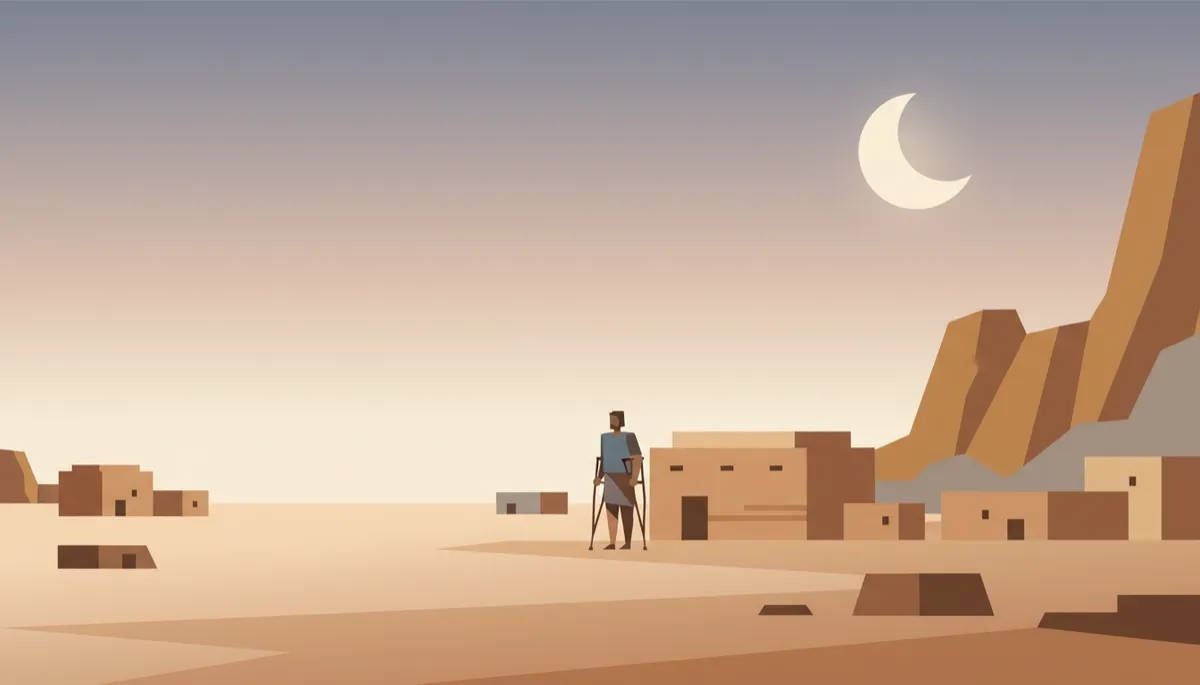
God’s kindness seeks us even in barren, hidden places where hope feels impossible.
Wounded at Five: When Someone Else’s Panic Breaks You
The text also tells us how Mephibosheth became disabled. When he was five years old and news came that Saul and Jonathan were dead, his nurse picked him up and fled. In the chaos and fear, he fell and became lame in both feet. Here is an injury sustained at five while someone else fled. His lifelong disability was not the result of his own choices but of someone else’s panic and the violent collapse of the world around him.
Some of our deepest wounds come this way. A parent’s addiction, a partner’s betrayal, a drunk driver, a war, a system that failed to protect us—events we did not choose but that left us limping through life. At Ministry Prayer Life, we often pray with people who carry injuries from childhood, traumas they never asked for. Mephibosheth’s story tells them: Scripture sees you. God remembers the five-year-old who fell when the adults ran.
“A Dead Dog”: When Shame Sounds Like Settled Fact
When Mephibosheth finally stands before David, his words are heartbreaking. After hearing the king’s promises, he replies, “What is your servant, that you should show regard for a dead dog such as I?” This is more than a passing insult. It is a self-description stated as settled fact. He doesn’t say, “I feel like a dead dog today.” He names himself as if this is his true identity—worthless, unwanted, already as good as gone.
That is how shame talks. It doesn’t just describe what happened; it defines who we believe we are. “I am trash.” “I am beyond help.” “I am nothing but a burden.” These are the lies that attach themselves to trauma, poverty, and rejection. In this chapter, identityandbelonginginScripture are on full display: Mephibosheth’s inner script says “dead dog,” but the king’s invitation says “beloved guest.”
💬 If this is you: If you’ve started to speak about yourself in final, condemning terms, know this—God is not agreeing with those labels. He is speaking a different name over you, one rooted in His love, not your wounds.
Why David Doesn’t Argue with His Self-Assessment
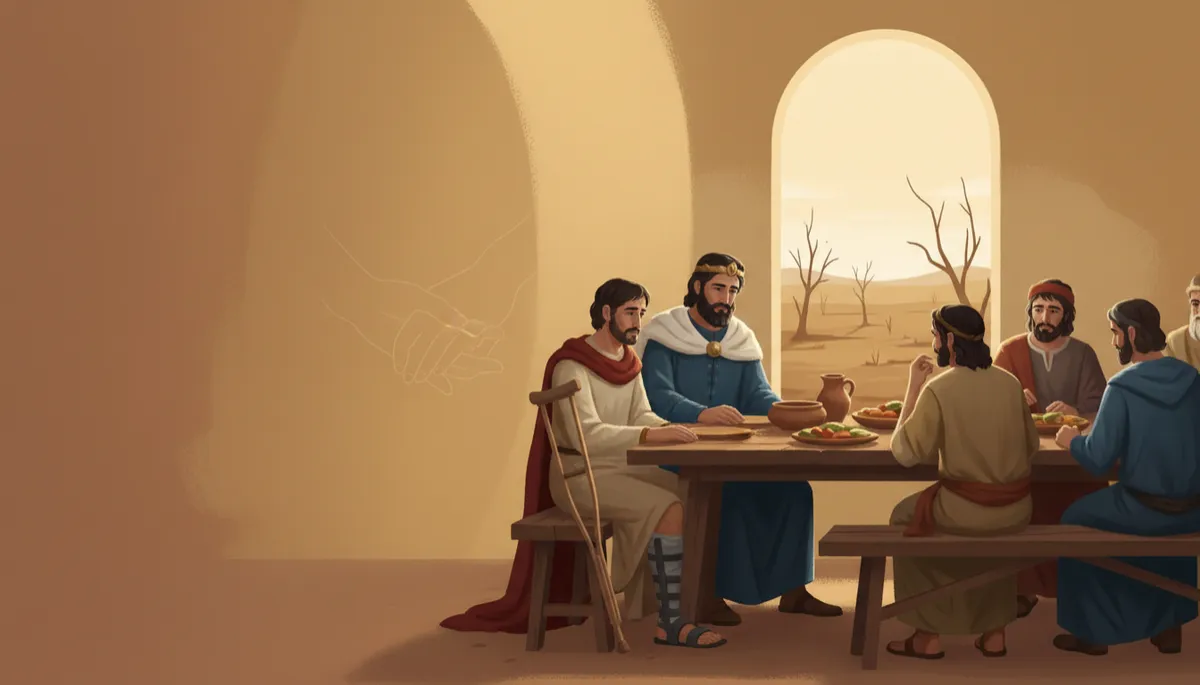
One of the most striking parts of this story is what David does not do. He does not stop and debate Mephibosheth’s “dead dog” statement. He doesn’t launch into a motivational speech or insist, “Don’t talk like that!” Instead, he quietly, firmly rearranges Mephibosheth’s reality. He restores his family land and, most importantly, declares that Mephibosheth will eat at the king’s table always—“like one of the king’s sons.”
David addresses the lie by changing the setting, not by arguing with the sentence. This is why MephiboshethatDavid'stable is such a powerful image. The king knows that identity is not healed by words alone but by belonging. A new seat, a new rhythm of daily fellowship, a new community of faces who see you differently—that is how shame begins to lose its grip. In our ministry, we see something similar when someone moves from isolation into a circle of prayer, support, and practical care. You don’t have to win the argument with your inner critic before you come. You come, and the table itself starts to tell you who you are.
Kindness for Jonathan’s Sake: The Power of Someone Else’s Name
The text repeats that David’s kindness is “for Jonathan’s sake.” This kindnessforJonathan'ssake is not random; it is rooted in a covenant made long before Mephibosheth could ever earn or request anything. He benefits from a relationship he did not create—a favor that flows down through the generations because of his father’s faithfulness and David’s promise.
For Christians, this foreshadows the grace we receive “for Jesus’ sake.” We are welcomed, not because we have a spotless record, but because of Someone Else’s name. God’s kindness comes to us in Christ the way David’s kindness came to Mephibosheth—undeserved, unearned, and unshakable. In the same way that Mephibosheth is carried from Lo-debar to the palace, we are carried by grace from spiritual barrenness into the presence of God. This is at the heart of every prayer we offer at Ministry Prayer Life: we come boldly, not in our own name, but in His.
“He Was Lame in Both His Feet”: Why the Chapter Ends There
The final line of 2 Samuel 9 is easy to overlook: “Now he was lame in both his feet.” The narrator has already told us this earlier, yet the chapter deliberately ends by repeating that he was still lame. Why? Because this is a story of restoration that does not erase the wound. Mephibosheth’s disability remains. His past is not rewritten. The fall at five still happened. But his place in the story has changed forever.
This is restoration that doesn't undo the damage but stops it deciding where you sit. He is still lame, but he is no longer hiding in Lo-debar. He is still wounded, but he is now seated at the king’s table as family. The brokenness is real, but it is no longer the most important thing about him. For anyone living with chronic illness, mental health struggles, or the long-term effects of trauma, this detail is deeply honest and deeply hopeful. God may not always remove the limp, but He absolutely can change your seat.
📌 Key Takeaway: Healing in Scripture is often less about erasing every scar and more about re-locating you—from exile to embrace, from hiding to home, from “dead dog” to “beloved guest.”
From Lo-debar to the Table: What This Means for Us Today
For those serving in outreach, especially among the unhoused, addicted, or traumatized, this chapter offers a pattern. The king does not wait for Mephibosheth to find his way back. He sends for him. He does not test his worth; he restores his place. He does not demand that he walk better; he makes room for his limp. That is the heart we long to embody at Ministry Prayer Life—going into modern Lo-debars with prayer, presence, and practical help, and whispering to each person, “You still have a place at the table of God’s love.”
Maybe your Lo-debar is addiction. Maybe it is a broken relationship, a criminal record, or years of feeling spiritually numb. Maybe you, like Mephibosheth, have started to believe that “dead dog” is simply who you are now. The message of 2 Samuel 9 is that the King is still asking, “Is there anyone I can show kindness to?” And the answer includes you. Not because you are strong, but because of Jesus. Not because you can walk without a limp, but because His love is stronger than your story.
An Invitation from Ministry Prayer Life: Come to the Table as You Are
At Ministry Prayer Life, we believe the same King who welcomed Mephibosheth is still welcoming people today. You do not have to fix your limp, rewrite your past, or silence every accusing voice before you reach out. Our calling is to meet you where you are—whether that is a hospital bed, a shelter, a quiet bedroom, or a street corner—and to remind you that you are seen, sought, and invited to the table of God’s grace.
If this story stirs something in you, we would be honored to pray with you. You can call our 24/7 prayer line any time, submit a prayer request online, or partner with us through volunteering or giving so that together we can carry the King’s kindness into more Lo-debars. Wherever you find yourself today—still limping, still hurting—there is a seat with your name on it. And the King Himself is the One who set it there.