Bárē or Phortíon? The Greek Word in Galatians 6 That Changes How You Help People
Paul uses the word "burden" twice in Galatians chapter 6, three sentences apart, and he uses two different Greek words to do it. That is not an accident. The distinction is the whole pastoral point of the chapter, and most of us spend a lifetime getting it backwards.
The two words
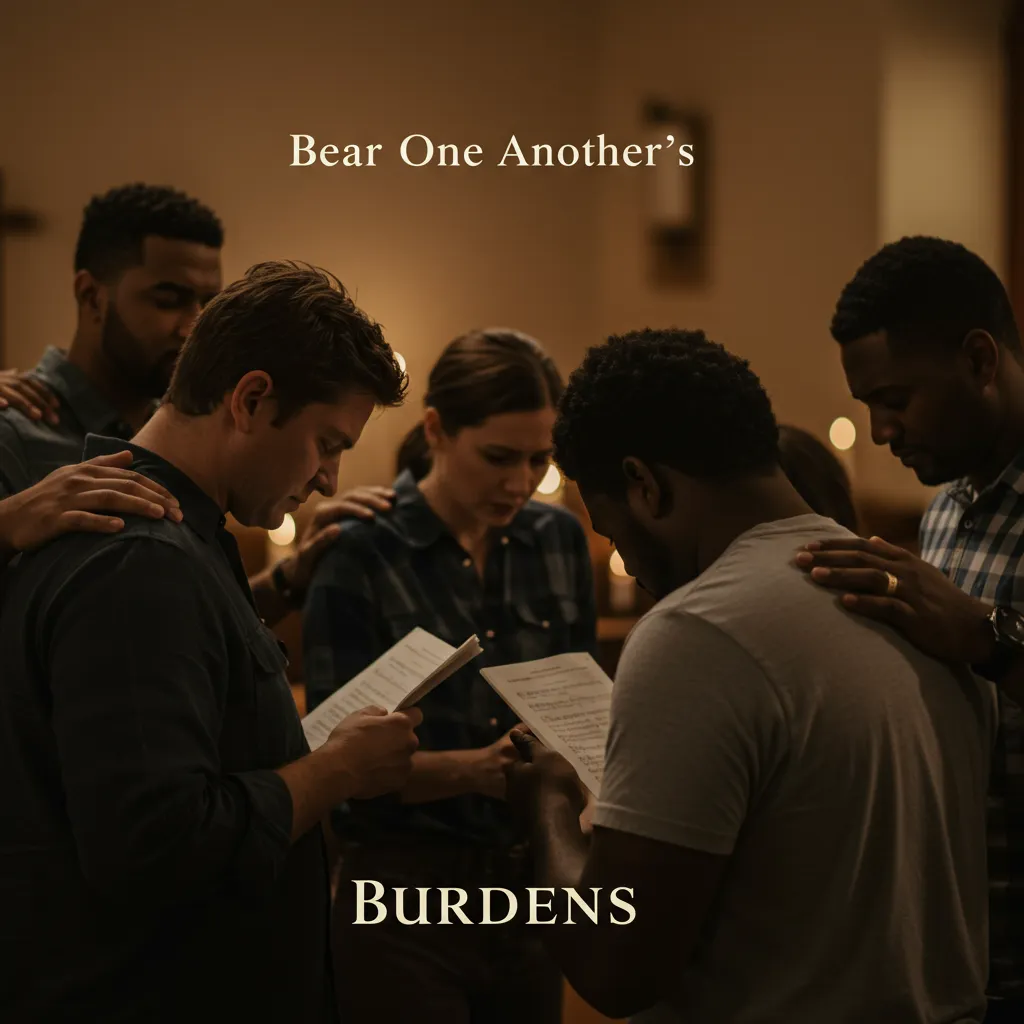
In Galatians 6:2, Paul writes: "Bear one another's burdens, and so fulfill the law of Christ." The word translated burden is bárē (βάρη) — a weight that genuinely cannot be carried alone. Heavy. Crushing. The kind of load that breaks a person if no one steps under it with them.
Three sentences later, in Galatians 6:5, Paul writes: "For each one shall bear his own load." The word translated load in this verse is phortíon (φορτίον) — a soldier's pack, a traveler's bundle, the daily carry a person is expected to handle as part of being a functioning adult.
Same chapter. Same paragraph. Two different words. Deliberately chosen.
What Paul is actually saying
Paul is not telling the Galatian church to carry every load for every person. He is telling them to step under the part of the weight that is going to crush a brother or sister if nobody does. The everyday carry stays with the person. The crushing weight gets shared.
Most of us get this backwards. We try to carry people's phortíon — their daily decisions, their attitudes, the consequences of choices they made and will keep making — and we leave the bárē alone because it is heavy and inconvenient. We feel like we are helping. We are not. We are enabling, and we are missing the actual call.
The distinction also frees the helper. If you have ever burned out trying to fix someone's life for them, it is because you were trying to carry phortíon that was never yours to carry. Paul is telling you to put it down. That load belongs to the person living it. Your job is the bárē — the part that would crush them.
What this looks like in our field
Inside the prison units we serve, the bárē is rarely the sentence. The sentence is phortíon — that load belongs to the person carrying it. The bárē is the wife who hasn't visited in eight months because she can't afford gas. The bárē is the kid who hasn't been told yet where dad is, and the mom is carrying that alone. The bárē is the moment a man gets released with twenty dollars, a bus pass, and nobody waiting at the gate. Those are weights that crush. Those are the ones we get under.
On the street, the bárē is not always a meal. Sometimes it is a name. Sometimes it is the second time someone has remembered you this week. Sometimes it is a phone charge and a ride to a probation appointment that, if missed, restarts a cycle nobody can afford. The load that crushes is usually smaller and more specific than people expect.
A pastoral filter for the week ahead
Before you sign on to carry someone's burden, ask yourself which Greek word it belongs to. If it is phortíon — their everyday carry, their consequences, their adult responsibility — your job is to stand near them, encourage them, and let them carry it. Carrying it for them dishonors them and exhausts you. If it is bárē — a weight that will crush them if no one shares it — Paul is telling you plainly: get under it.
The discipline is learning to tell the difference. The verse rewards the people who learn.
If you are the one carrying the bárē
If you are reading this carrying something that is the bárē kind — the kind you genuinely cannot carry alone — the prayer line is open. We will step under what we can. We will not pretend we can carry your phortíon for you, because we can't, and the lie wouldn't help you. But the crushing weight, the part that wakes you at 3 AM — we will get under that part with you.
That is the call. That is the verse. That is the job.
24/7 Prayer Hotline: (833) 994-2437 Email: [email protected] ministryprayerlife.com