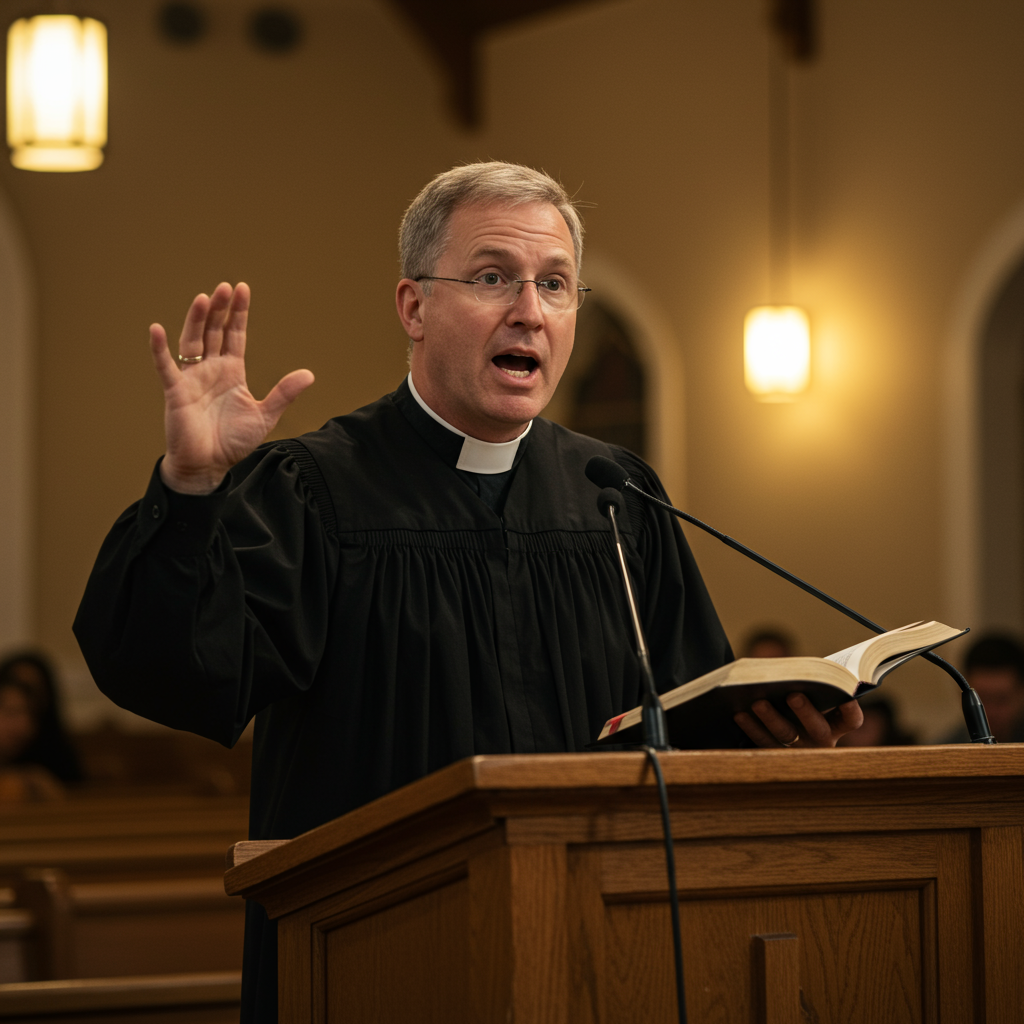
Finding Hope: God's Love for the Broken
Faith, Prayer, Hope, Ministry Prayer Life
When You Feel Too Far Gone: The God Who Moves Toward the Broken
There is a particular lie that does not shout. It settles. It sinks. It hangs over the heart like a heavy, gray sky: “You are too far gone. God is done with you.” It rarely comes as a clear sentence. Instead, it works quietly as a heaviness that makes it hard to reach out, hard to pray, hard even to imagine that God would want to hear your voice anymore.
This lie rarely argues with theology. It doesn’t debate Bible verses. It simply whispers, “Not for you. Not after what you’ve done. Not after how many times you’ve failed.” So the phone stays on the table instead of dialing. The Bible stays closed. The prayer you want to pray dies somewhere between your chest and your throat. You might even tell others that God is merciful while secretly believing you are the exception, the one person His mercy will not cover.
The Quiet Weight That Keeps You From Reaching Out
For some, this heaviness feels like numbness. You want to care, but you don’t feel anything. For others, it feels like shame that sticks to the soul. You replay choices you wish you could undo. You think of relationships broken, promises not kept, moments when you knew better and still went ahead. Over time, the lie grows roots. It attaches itself to your identity: broken beyond repair, beyond help, beyond God.
That is exactly where the lie does its most subtle work. It doesn’t just say, “You did something wrong.” It says, “You are what you did.” And if you are what you did, then why would a holy God move toward you? Why would you call a prayer line, walk into a church, or even whisper His name in the dark? Better, the lie says, to stay quiet. To stay away. To stay hidden.
Psalm 34:18: The Truth That Cuts Through the Lie
Into that heaviness, God speaks a different word. Psalm 34:18 says, “The Lord is close to the brokenhearted and saves those who are crushed in spirit.” Notice what it does not say. It does not say, “The Lord is close to those who have it together.” It does not say, “The Lord is close to those who never should have gotten themselves into this mess.” It says He is close to the brokenhearted, and He saves the crushed in spirit.
That means the very condition that makes you feel disqualified is the very condition that draws Him near. The brokenness you think disqualifies you is actually the address where God is already standing. The heaviness you think proves He has left is the very place He leans in closest. Where you feel crushed, He does not step back in disappointment; He steps forward in compassion and power to save.

God’s nearness often shows up as someone willing to sit, listen, and pray.
Why Ministry Prayer Life Goes to the Streets, Shelters, and Behind Bars
At Ministry Prayer Life, this truth is not a slogan; it is our map. If the Lord is close to the brokenhearted and saves those crushed in spirit, then we expect to find Him in the very places people feel most forgotten. That is why this ministry intentionally goes to the streets, to shelters, and behind bars. We are not bringing God to those places as though He were absent. We are joining Him where He already is, moving toward the broken instead of keeping our distance.
On a sidewalk where someone has nowhere to sleep tonight, the lie whispers, “You are invisible.” In a shelter line, it says, “You are a problem to be managed.” Inside a cell, it hisses, “You are only your record.” But the gospel says something else: you are seen, you are known, you are still wanted. Going to those places is a way of saying with our presence what Psalm 34:18 says with words: God is not avoiding you. He is drawing near to you.
Jesus and the Ones Everyone Else Wrote Off
Jesus has always moved toward the people others tried to avoid. He went to tax collectors who were considered traitors and thieves. He sat at their tables, used their names, looked them in the eyes. He did not wait for them to clean up their reputations first. He did not say, “When you are less of a scandal, then I’ll come by.” He walked straight into the homes and lives of those others had written off as “too far gone.”
The religious leaders of His day could not understand this. They questioned why He would spend time with people like that. But Jesus was clear: He came for the sick, not the healthy; for sinners, not the self-satisfied. If you see yourself as beyond hope, you are exactly the kind of person He consistently moved toward. Ministry Prayer Life follows that pattern, not because we are noble, but because this is who Jesus is. The tax collector at the table, the woman caught in shame, the man chained by demons—they are not side stories. They are the testimony that no one is beyond His reach.
Why the Prayer Line Is Toll-Free: Removing One More Wall
If God moves toward the broken, then His people must also remove whatever barriers they can. One of the simplest, most practical barriers is cost. That is why the Ministry Prayer Life prayer line is a toll-free number. For someone inside prison walls, phone minutes are precious. For someone without steady income, every call is a calculation. We do not want the question, “Can I afford this call?” to stand between a person and a voice that will pray with them in Jesus&rsquo name.
A toll-free number means that when a mother sits in a shelter lobby late at night, or a man in a halfway house stares at the phone on the wall, the door to prayer is not locked by cost. It is one more way of saying: you are not too far gone, and you do not have to pay to be heard. The line is open because God’s heart is open, and we want the path between you and prayer to be as clear as possible.
“When Did We See You?” — Matthew 25 and the Face of Jesus
In Matthew 25, Jesus speaks about the hungry, the stranger, the sick, and the prisoner. He does not simply say that He cares about them. He identifies with them. “I was hungry and you gave me something to eat… I was a stranger and you invited me in… I was in prison and you came to visit me.” When the righteous are confused and ask, “When did we see You like that?” He responds, “Whatever you did for one of the least of these brothers and sisters of mine, you did for Me.”
That means the person in a cell, the one sleeping in a doorway, the one who feels like a stranger in their own life—they are not just recipients of charity. They are, in a mysterious and holy way, places where Jesus chooses to be recognized. To move toward them is to move toward Him. This is why Ministry Prayer Life refuses to believe anyone is “too far gone.” Jesus has already named the hungry, the sick, the stranger, and the prisoner as His own.
Enduring Hardship vs. Being Carried Through It
There is a difference between merely enduring hardship and being carried through it. Enduring can look like gritting your teeth, counting the days, and trying not to fall apart. It is survival mode. Many people live years, even decades, in that space—breathing, but not really living; enduring, but not changing. The lie that you are too far gone keeps you there. If nothing can really change, you may as well just hold your breath and hope to make it through.
Being carried is different. Being carried means you are not the one holding everything together. It means Someone stronger than you is walking with you, bearing weight you cannot bear, speaking truth against the lies that have wrapped around your mind. When God carries a person through hardship, they do not come out the other side untouched, but they do come out changed. The shame that once defined them loosens its grip. The story that once ended in despair is rewritten in hope. Ministry Prayer Life exists to point, again and again, to the One who carries, not just to techniques for surviving.
Jesus Is the Reason Any of This Is Possible
None of this rests on the strength, goodness, or wisdom of the people answering the phones or walking into shelters. If it depended on us, the lie that anyone could be too far gone might eventually feel true. But Jesus is the reason any of this is possible. He is the One who took on the weight of sin and shame. He is the One who walked into death and came out the other side. He is the One who still moves toward the broken, still sits with the outcast, still calls the weary to come and rest.
When someone calls the prayer line at 2 a.m., we are not offering our own name as a solution. We are speaking His. When we pray with someone in a shelter lobby or in a visiting room, we are not asking them to trust us as savior. We are pointing to Him. The hope is not that Ministry Prayer Life is strong enough, but that Jesus is near enough, willing enough, and powerful enough to meet people exactly where they are.
An Open Invitation for the Struggles You Haven’t Spoken Aloud
If you are reading this with a knot in your stomach, carrying struggles you have not told anyone, hear this clearly: you are not too far gone. Not for God. Not for His mercy. Not for His attention. The heaviness that has kept you from reaching out does not have to have the last word. The Lord is close to the brokenhearted. He saves those who are crushed in spirit. That includes you, right now, exactly as you are.
The prayer line at Ministry Prayer Life is open around the clock—day and night, weekends and holidays, in the quiet hours when everyone else is asleep and the noise in your mind is the loudest. It is toll-free because cost should never stand between you and a moment of honest prayer. Whether you are in a dorm room, a hospital bed, a shelter, a cell, or sitting alone in your car, you do not have to walk through this weight alone. You can call. You can ask for prayer. You can let someone remind you, out loud, that God moves toward the broken, and that He has not given up on you.
This is not an invitation to pretend your pain is small. It is an invitation to bring your real, unedited story to the One who already knows it and still says, “Come.” Whenever you are ready—even if all you can manage is a whisper or a sigh—the line is open, and more importantly, His heart is open. You are not too far gone. You are exactly where His grace is able to reach.