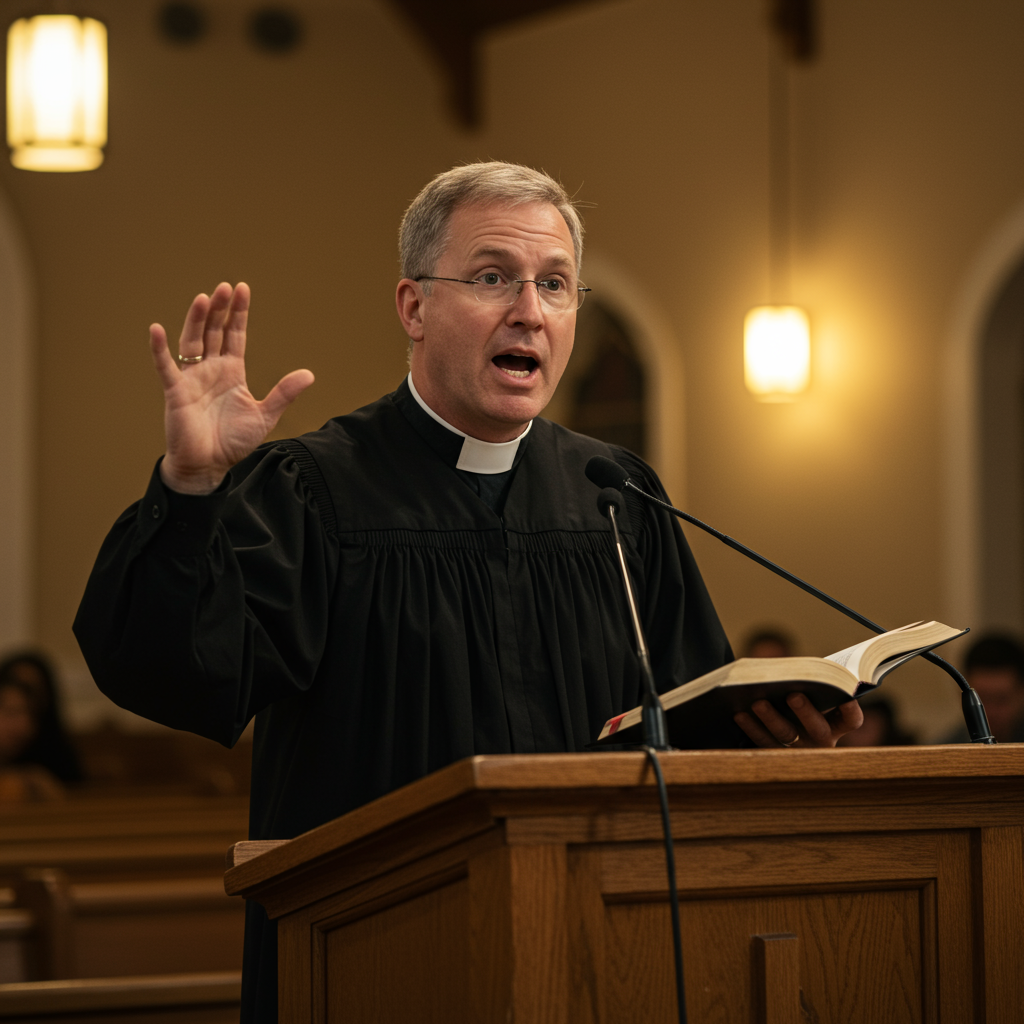
God Uses the Worst of Us to Be the Best of Us
There's a young man named Chris who has been staying at my neighbor's house from time to time.
My neighbor James is not in the best of health and can't work. He's living free in the house he's in as long as he keeps working on it and fixing it up slowly. He really has no money or possessions of his own, so he lets other people come stay with him as long as they help. I also think he's lonely — he's elderly, with one foot in the grave — and he likes the company.
This story isn't really about James, although I do get to go down and minister to him quite often, sit out on the porch and breathe in the fresh air. This story is about Chris.
I had been worried about James. I happened to be outside working on something — some Curb Elite Solutions work — when I saw Chris leaving, walking away from James's house toward the main street. I had just been down at James's, knocking on the door, and gotten no answer.
I hopped into my truck and figured if I gave Chris a ride, he could let me know how James was doing. Sure enough, Chris was heading down the main street toward 7-Eleven, because that's the closest store. Well, I had a truck, and I told him I'd get him to a better store. I at least got him to the grocery store, which gave us enough time to chit-chat and for me to ask about James.
Apparently I started preaching, I guess. I started talking about the playlist I was bumpin' — I happened to be playing my prisoner transport mix. I think I had handed him a business card. I asked him, "Are you a Christian? Do you believe in prayer?"
That's where he started to open up. His original answer was a little thuggish — "Oh yeah, you know, I been a Christian since way back when, just been hard on the streets dealing." The usual excuse for why he wasn't practicing.
I told him, "There's nothing wrong with that, as long as you have God in your heart and you take the time to pray to Jesus. The Lord knows where we are and what we need."
That's when he let me know he wasn't from Oklahoma — he was from Louisiana. He had just gotten out a couple of years ago from prison. He'd been in a couple of times, he said, but he was done this time. He figured since this was his third visit, he didn't need to go back for a fourth. All of his prison time had been right here in Oklahoma.
That's when he switched to how he had spent the last fifteen years inside, here in Oklahoma. Not one long visit — he had managed a few short stretches in the real world in between. Once for only six months. The second time for a year. This time, he knew it would hold, because he had already been out well over two years.
That's when he started telling me about the last time he was in. He told me about the meanest, hardest gangbanger he had ever known on the inside — an OG of his set, a man who would kill you if you even looked at him wrong — and how that man had changed.
"Oh really?" I asked. "How so?"
He told me the man was now forcing his crew to church. Cleaning up where and when they didn't have to. Going so far as to lead prayer circles for no reason at all. "You know — Bible thumpin', blood!" he said, exactly like that.
I started to chuckle. I was laughing — but not at Chris, and not at the OG. I was laughing at God. Chris gave me the oddest look.
"Of course He used that man," I told him. "It's obvious."
Chris looked at me like he didn't follow.
"That makes perfect sense," I said. "The meanest, baddest, most horrific person you could think of is now the chairman of the church inside that prison."
He was still a little confused. I wanted him to understand why I was laughing, and why what he had just described was funny and right at the same time. So I looked over at him and asked, "Of course you know who Paul was, right?"
"I don't know," he said. He told me he had been around it — had been there in the studies on the inside, sat with the brothers in there — but at first he had thought the OG was kind of faking it. Until he realized the man wasn't faking it at all.
"Of course he wasn't," I said.
And then I gave Chris a statistic. I told him the majority of Christians like me — out here in the world — don't go out and evangelize and proclaim the name of Jesus the way we should. Do you know where the most fired up and holy place actually is right now? It is in the prisons. You cannot get a brother who has just been saved on the inside to stop talking about Jesus. Imagine it. All you get to do is sit in your cell and read the Word and praise Jesus, period. That is what you get. So yes — you have some fired-up, evangelical people in there. They are ready to tell the world about Jesus.
Just like Paul. After Paul could see again.
I could tell he was confused and didn't have a clue what I was really talking about when I mentioned Paul. He did not know the connection. So I told him.
"You know who Saul of Tarsus was?"
I walked him through it. One of the greatest, meanest, most murderous Pharisees of his day. A man known for his cruelty and his punishments — the way he hunted and persecuted the followers of Jesus, trying to snuff out the light of Christianity before it could take hold.
Then I looked over at him.
"But you realize who he really is now, right? The most prolific author of the New Testament — the man who wrote more books in your Bible than anyone else — is Paul. And Paul was Saul of Tarsus."
I could tell this really got to him. He was just looking at me.
"What?"
"Yeah, brother. You got it. The meanest, the most cruel of them all — the one who hated the Christians the most — is the most known disciple to have ever written for us in the New Testament. The very guiding light we follow."
It clicked. "Wow. OK. So I guess he really was not faking it. He really was into Jesus."
That was Chris finally connecting back to the OG he had been telling me about. The man on the inside who had been the meanest and was now the chairman of the church. He saw the pattern now. Same story, different millennium.
So I kept going.
I told him about Jesus walking on that road to Damascus. The disciples were still hiding out, right before Jesus was about to go away from them. Nobody knew Jesus was on that road. But that is just how He is. He could be back with the disciples sharing the last of His time with them, and meeting Saul on the road to Damascus at the same time, knocking him to the ground and blinding him. God is funny like that. He likes to play a joke. Of course He blinded the very man who was on his way to Damascus to kill and persecute more Christians — and in doing so, He made Saul completely dependent on those very Christians to care for him.
Saul had to go stay with a Christian family. And those Christians had to hide. It wasn't like nowadays where we are open about it, no big deal, come on over to the Christian's house for a cookout. They had to endure real fear. They knew nothing would happen to them because Jesus had told them to take care of this man — but still, the man who had come to their city to hunt them down and kill them was now going to be in their house, under their care.
So a literal washing-away of a near-sighted blindness came in that house. The scales melted from Saul's eyes, and he saw — and he knew — the truth of Jesus. From that moment he could no longer be Saul of Tarsus, the persecutor and hunter of Christians. He became Paul. One of the most prolific, talked-about, and known disciples of Jesus — because of who he was and what he had done.
The drive ended. So did the sermon I had ready.
By the time I dropped Chris off, I knew I was not going to preach what I had originally planned.
Now, here is something most people on the outside do not realize about prison ministry. We are not allowed to take any paper products in with us. No notes. No outlines. No Bibles. So before I head into a unit to preach, I write the scripture references I need in Sharpie. On my arm. That is my pulpit. That is my outline.
I had already inked up the Romans Road on my arm a day or two earlier. Romans 3:23. Romans 6:23. Romans 5:8. Romans 10:9–10. Romans 10:13. The standard five-verse outline, ready to go.
I had to wash all of it off and start over.
If you have ever tried to scrub fresh Sharpie off your skin, you know it is not a fast or clean process. I had to push that ink off and then re-write the new references the Lord had been laying on me during the drive — Acts 9 for the Damascus road, 1 Timothy 1:13–15 for Paul owning his record. By the time I got the arm right, I was ready. I knew the Lord had built that sermon for the specific room of men I was about to walk into.
A mile from the gate, the prison canceled.
I had driven an hour and a half one way to get there with my teammate.
The phone rang in the truck. It was the call. The unit had canceled on us. We were turning around. Going home. The sermon I had spent two days rewriting on my arm — with God's hand on every verse change — was not going to be preached that day.
I will be honest with you. That hurt.
But here is what has happened in the two weeks since.
I have been telling this story — Chris, the OG, Saul of Tarsus, the road to Damascus — to people one and two and three at a time, in driveways and on porches and standing in line at gas stations. Almost every single person I have shared it with has been fully intrigued. And the part that has surprised me the most?
How many of them — Christians, every one of them — did not know the connection between Saul and Paul.
I do not say that to shame anyone. I hate to say it at all, because most of the people I am talking to are doing their best. They honestly believe in their heart that they are good Christians. They mean it. They are no more faking it than the OG inside that prison was faking it.
But meaning well is not the same thing as growing in Christ. Knowing of Jesus is not the same thing as walking with Jesus. And the moment you start actually walking — picking up the Book, sitting with the harder questions, learning that the most prolific author of your New Testament used to hunt people exactly like you — your faith stops being a costume and starts becoming a posture.
That growth is what we are all called to. Not perfection. Not seminary degrees. Just the next step on the road. The same one Ananias took when he laid hands on a man everybody told him not to trust. The same one Saul took when he got up off the ground and walked into Damascus blind. The same one Chris took, in a different way, when he opened up in the cab of my truck and let a Bible-thumping pastor talk to him about a Pharisee from two thousand years ago.
If you are reading this
Take it as the sermon I never got to preach.
You have your own record. Some of it the world knows about. Most of it nobody does. You have moments you cannot pray about because you do not believe the door is still open to you.
The door is still open.
Saul's door was still open on a road where he was actively trying to slam it shut. The OG's door was still open in a cell. Chris's door is still open on a street in Oklahoma. Yours is still open right now, reading this.
The God who knocked Saul off the road and put him in a Christian house with scales falling off his eyes is the same God who is still in the business of using the most unlikely people in the room. He is asking the same thing of you that He asked of Saul: get up, go into the city, and wait for the next instruction.
And maybe — just maybe — the reason that sermon got canceled at the prison gate two weeks ago was so it could find its way to you, sitting on whatever screen you are reading this on, on whatever ordinary morning the Lord put it in front of you.
If you need someone to sit on the line with you while you figure out what your next instruction is, the prayer line is open. We will pray you through. That is the call. That is the job.
24/7 Prayer Hotline: (833) 994-2437 Email: [email protected] ministryprayerlife.com