Healing at Bethesda: A 38-Year Journey
John 5, Pool Of Bethesda, Healing Identity, 38 Years Struggle, Take Up Your Bed, Prison Ministry Insights
“Do You Want to Be Healed?” — The Hardest, Truest Question at the Pool of Bethesda
In John 5, at the Pool Of Bethesda, Jesus asks a man who has suffered for thirty-eight years a question that can sound painfully cruel: “Do you want to be healed?” For many of us who have walked with people in long-term struggle—inside prison walls, on the street, or in our own families—that question cuts close to the bone. Yet hidden in it is one of the most honest, freeing invitations in all of Scripture.
Why “Do You Want to Be Healed?” Sounds Cruel at First
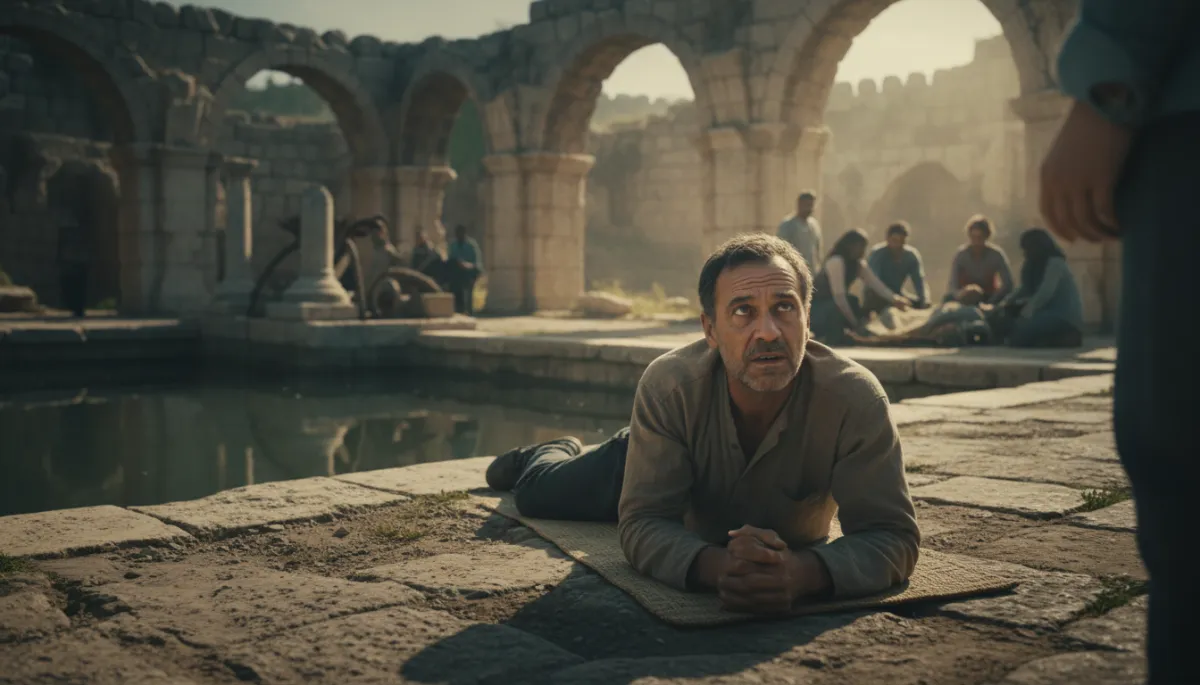
When you first read John 5, the scene feels almost offensive. A man with a thirty-eight year struggle lies by the Pool Of Bethesda. He is disabled, marginalized, and stuck. Jesus walks up and asks, “Do you want to be healed?”
Imagine asking a man in a wheelchair, a woman serving her tenth year in prison, or a brother sleeping under a bridge, “Do you want things to change?” It sounds like you are questioning their pain, their sincerity, even their intelligence. Of course they want to be healed. Of course they want freedom. Don’t they?
But in years of prison ministry and street outreach with Ministry Prayer Life, I have learned something sobering: not everyone who is hurting is ready to be healed. Pain can become familiar. Dysfunction can feel safer than the unknown. Sometimes, staying sick seems easier than facing what healing will require—new responsibilities, new relationships, and a new identity. Jesus is not mocking the man. He is naming the deepest tension of the human heart: Do you truly want what you say you want, all the way down?
📌 Key Takeaway: The question “Do you want to be healed?” is not cruelty; it is an invitation to honest desire, beyond habit, fear, and survival mode.
What Thirty-Eight Years in a Hard Place Does to Identity
Scripture tells us the man had been an invalid for thirty-eight years. That is an entire lifetime for some. In prison ministry, I have sat with men who have worn the same DOC number for decades. I have prayed with women on the street who cannot remember what it felt like to sleep indoors as a child. Over time, the struggle stops being something they have and becomes who they are. This is the heart of healing identity.
Thirty-eight years of lying by that pool meant the man’s entire life was organized around his limitation. His schedule, his relationships, his expectations of God and people were all filtered through the lens of, “I am the man who cannot get there in time.” When your 38 Years Struggle shapes every story you tell about yourself, healing is not just about muscles and bones. It is about identity surgery. Jesus is not only asking, “Do you want your legs to work?” He is asking, “Are you willing to stop being the man defined by this mat?”

Photographic realistic timeless tones close-up of an older man’s hands resting on a worn...
Long seasons of struggle slowly rewrite how we see ourselves and our future.
In conversations through the 24/7 prayer line at Ministry Prayer Life, I often hear people say, “I’m just an addict,” “I’m just a felon,” “I’m just broken.” Their mat has become their name. John 5 reminds us that before Jesus heals the body, he confronts the name we have quietly accepted for ourselves. Healing identity means hearing Him say, “That is not who you are in Me.”
Why the Man Answers with an Explanation Instead of a Yes
Notice how the man responds. Jesus asks, “Do you want to be healed?” and he does not say, “Yes.” Instead he offers an explanation:
“Sir, I have no one to put me into the pool when the water is stirred up, and while I am going another steps down before me.” (John 5:7, ESV)
That answer is painfully familiar. In prison yards and under city bridges, I have heard versions of it a thousand times: “I would change, but I don’t have support.” “I would get clean, but everyone around me uses.” “I would follow God, but you don’t know my record.” These are not lies; they are real obstacles. But they are also a way of answering the question without really answering it. Explanations keep us safe from the risk of desire. If I never say “yes,” I never have to face what happens if nothing changes.
💡 Pro Tip for Soul Care: When you talk to God about your struggle, notice when you start explaining instead of simply answering. Sometimes the most powerful prayer is, “Yes, Lord. I want to be healed.”
A Hope Built on a Mechanism That Requires Strength You Don’t Have
The man’s entire hope rested on a story about how healing works: when the water is stirred, the first one in gets healed. That means his hope was attached to a mechanism that actually required him to be strong, fast, and well-connected—everything he was not. To be healed, he had to beat the competition. He needed someone to carry him. He needed a system that favored the strong, not the weak.

Photographic realistic timeless tones overhead view of several people reaching toward a small...
When hope is tied to competition, the weakest are left watching from the edge.
Many of the men and women I meet through prison ministry insights carry that same kind of broken hope. “If I can just get the right lawyer, the right program, the right connection, then I’ll be free.” Or on the street: “If I can just get that one job, that one relationship, that one break, then I’ll finally change.” But every mechanism they trust requires them to already be strong, stable, and self-controlled. It’s a cruel treadmill of almost-healing that never arrives.
Jesus steps into John 5 and quietly overturns the whole system. He does not help the man get into the water. He does not fix the rules of the pool. He brings a new source of healing that does not depend on the man’s speed, connections, or strength. Grace walks up to the weakest one in line and says, “I am enough for you, right here, without the pool, without the race, without the system.”
📌 Key Takeaway: The gospel does not demand that you become strong enough to reach God. In Christ, God comes to the weakest place in your life and offers healing on the ground where you lie.
“Take Up Your Bed”: Leaving a Place You Might One Day Return To
After Jesus heals the man, He says something that sounds practical but is deeply symbolic: “Get up, take up your bed, and walk.” That bed had been the man’s home, his label, his explanation, his excuse. It was the physical reminder of his 38 Years Struggle. Why not just leave it behind as trash? Why carry it?

Photographic realistic timeless tones man walking away from an old stone pool carrying a...
The bed becomes a testimony, not a prison, when Jesus says, “Walk.”
In ministry, I have watched people leave prison or addiction like this man left the pool. They step into freedom, but they still carry the memory of the cell, the shelter, the street corner. “Take up your bed” means, Don’t pretend your past never existed. Bring it with you as a testimony, not as a place to lie down again. That mat, once a symbol of helplessness, becomes a portable altar of God’s faithfulness.
At the same time, “take up your bed” is a warning. Many who leave incarceration or the streets eventually go back—not always by choice. Systems fail, temptations return, doors close. When you have to return to a hard place, the question is: Are you coming back as the same person who left, or as someone who now walks with Jesus’ word over your life? The man at the Pool Of Bethesda would one day walk past that same spot again. But now, he would be the man who once lay there, not the man who lives there. That is the subtle but powerful shift of healing identity.
Ministry Prayer Life: Walking With People at Their Own Pool of Bethesda
At Ministry Prayer Life, our calling is to stand with people at their own Pool Of Bethesda—whether that is a prison bunk, a hospital bed, a motel room, or a quiet living room where no one else knows the battle that rages inside. Every day, our 24/7 prayer line hears echoes of John 5: explanations, disappointments, and fragile hopes tied to systems that have failed again and again. And into that, we gently echo Jesus’ question: “Do you want to be healed?”
We ask it not to shame, but to invite. Not to expose weakness, but to open the door for God’s strength. We have seen men in solitary confinement rediscover their true name in Christ. We have seen women on the street pick up their “bed” and walk toward a new life with courage they did not know they had. And we have seen donors, volunteers, and prayer partners become part of the miracle—carrying mats, sharing burdens, and pointing people away from the pool and toward the Savior who stands beside it.
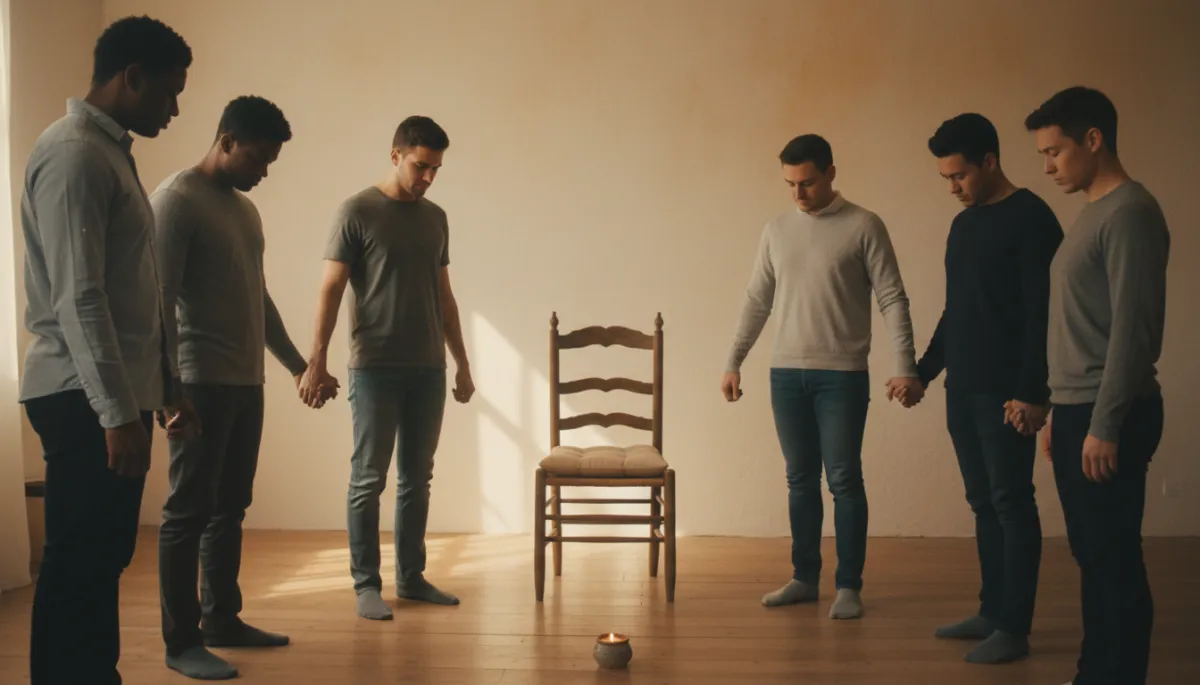
Photographic realistic timeless tones small prayer circle in a simple room, diverse group...
Every prayer, volunteer hour, and gift helps someone stand up from their mat.
Your Next Step: Answering the Question for Yourself and Others
Maybe you see yourself in the man at the Pool Of Bethesda. Maybe your struggle has lasted so long that it feels like your name. Maybe your hope has been tied to mechanisms that keep failing you. Today, hear Jesus’ question as an act of compassion, not cruelty: “Do you want to be healed?” You do not have to explain. You do not have to defend. You can simply answer Him, honestly, from where you are lying right now.
And if you carry a burden for others—people behind bars, on the street, or silently hurting in your own community—we invite you to stand with us at their pool. Call our 24/7 prayer line, submit a prayer request for someone you love, volunteer your time, or support this work through a financial gift. Together, we can help men and women not only rise, but also take up their bed and walk into a new identity in Christ, even if life leads them back through old places.
Wherever you find yourself today—in a cell, on a sidewalk, or in a pew—Jesus is still asking the most honest question in John 5. May your heart find the courage to answer, and may your life become a living testimony that the One who heals at the Pool Of Bethesda still heals today.