Healing at Bethesda: A Journey of Hope and Identity
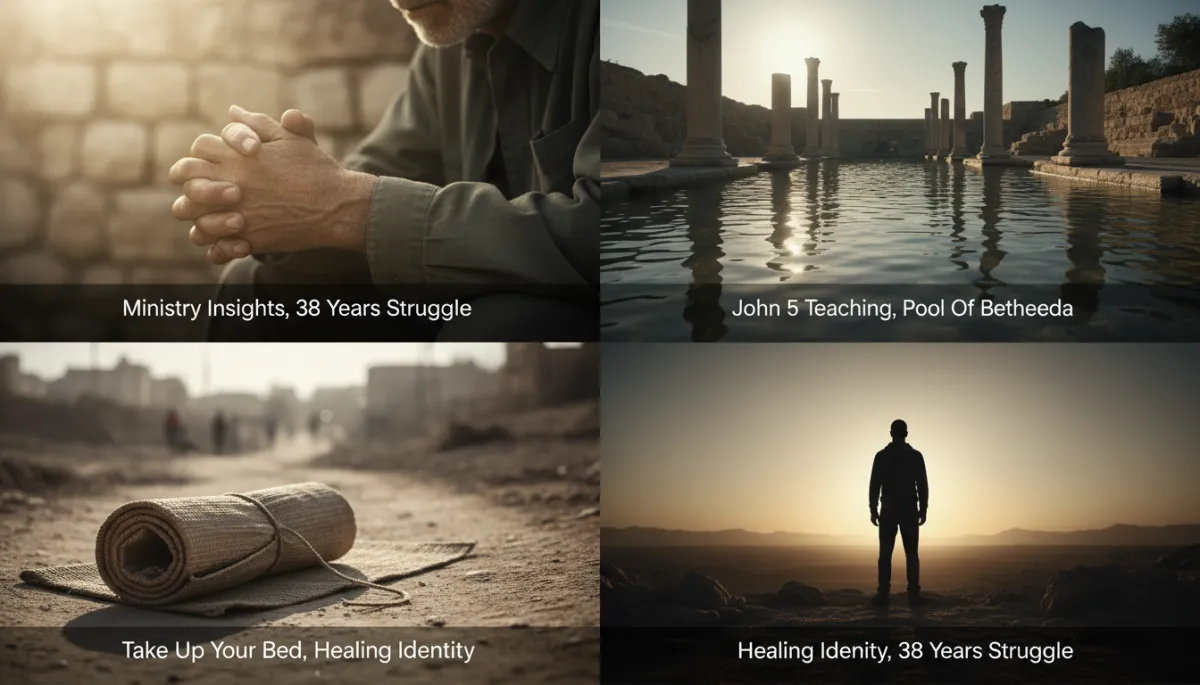
John 5 Teaching, Pool Of Bethesda, Healing Identity, 38 Years Struggle, Take Up Your Bed, Ministry Insights
“Do You Want to Be Healed?” — The Most Honest Question at the Pool of Bethesda
At the Pool Of Bethesda in John 5, Jesus asks a man who has suffered for thirty-eight years a question that still unsettles us: “Do you want to be healed?” It sounds almost cruel, but inside that question is a doorway into identity, hope, and what it means to leave a hard place without losing the story of how you survived there. For nonprofits, churches, and communities walking with people in long-term struggle, this John 5 Teaching is less a miracle moment and more a mirror held up to our ministry practices.
When a Honest Question Sounds Cruel
“Do you want to be healed?” You can almost hear the flinch in the air. In prison dayrooms and on street corners, I have watched men and women react the same way when hope walks in wearing plain clothes and asks a question that cuts too close. After 38 Years Struggle, the wound is not just in the body; it is in the story you have told yourself to stay alive. To that story, the question sounds offensive, like someone kicking at the only shelter you have left.
Yet in John 5, it is the most honest question in the passage. Jesus does not ask, “How long has this been going on?” or “Who hurt you?” He does not start with empathy the way we usually script it in our grant reports and program brochures. He starts with desire. Not the polite desire we write on intake forms, but the deep, trembling question: Do you still want anything at all beyond the life that has grown around your pain?
📌 Key Takeaway: Honest ministry does not assume that wanting change is automatic. It dares to ask about desire, even when the question risks sounding cruel.
Thirty-Eight Years and the Weight of a Name
John never tells us the man’s name. He tells us his duration: thirty-eight years. In the cellblocks where Ministry Prayer Life has listened through the night, people are often known more by their sentence than by their story. “He’s doing twenty.” “She’s on her third bid.” Time becomes a kind of name tag. You are no longer “James” or “Maria”; you are the number of years you have survived in a hard place.
Thirty-eight years at the Pool Of Bethesda means more than physical limitation. It means your entire social world has formed around your condition. People know where to find you. They know what to bring you. They know what to expect of you. Your mat is not just a bed; it is an address. Over time, Healing Identity becomes dangerous, because if you are healed, who are you when the mat is gone? Where do people find you then? Who are you to yourself when you are no longer “the one who lies by the pool” or “the one who’s always locked up” or “the one who can’t seem to get clean”?

Long-term struggle carves a groove in identity as deep as any scar.
In our work with nonprofits and community partners, we meet people whose entire relational ecosystem orbits their pain. The shelter staff know them. The chaplain knows them. The local outreach team knows where their corner is. Healing is not just a blessing; it is a relocation. It asks, Can you bear to leave the address where suffering has made you known?
Why the Man Explains Instead of Saying “Yes”
When Jesus asks his question, the man does not say, “Yes.” He offers an explanation: “I have no one to put me into the pool… and while I am going, another steps down before me.” It is the language of someone who has rehearsed his defense for years. In prison ministry, we hear it all the time: “I was young.” “I had no father.” “I never had a chance.” These are not excuses; they are survival scripts. They explain why the world is the way it is so that the ache of unfulfilled desire does not crush the heart completely.
The man at the pool has learned to answer “why I am still here,” not “what I want now.” Desire is dangerous because it can be disappointed again. Explanation is safer. For many we serve through Ministry Prayer Life, the reflex to explain is a shield: if I can tell you why I am broken, maybe you will not ask me if I still want to be whole. Honest John 5 Teaching listens to the explanation but does not let it be the final word. Jesus hears the story and then speaks past it, right into the unspoken yes the man no longer knows how to say.
💡 Pro Tip for Ministries: When someone answers your question about hope with an explanation, do not correct them. Listen deeply, then gently return to the question beneath their story: “And what do you want now?”
A Hope That Demands You Already Be Strong
The man’s entire hope rests on a mechanism: an angel stirs the water; the first one in gets healed. It is a lottery for the quick and the connected. You must already be strong enough, fast enough, or networked enough to win. It is a cruel architecture of hope, because the very condition that makes you need healing also disqualifies you from reaching it first. The system is not designed for the weakest; it is designed for the almost-strong, the nearly-there, the one who just needs a small boost to reach the water.
This is where the Pool Of Bethesda looks uncomfortably like some of our modern programs. We say “everyone welcome,” but the unspoken rule is that you must already have transportation, already have ID, already be sober, already be willing to sit through an intake, already be articulate enough to tell your story in the language of our forms. The water is stirred, but only those who can move quickly enough get in. Our 38 Years Struggle friends sit at the edges, watching others step over them into the miracle.
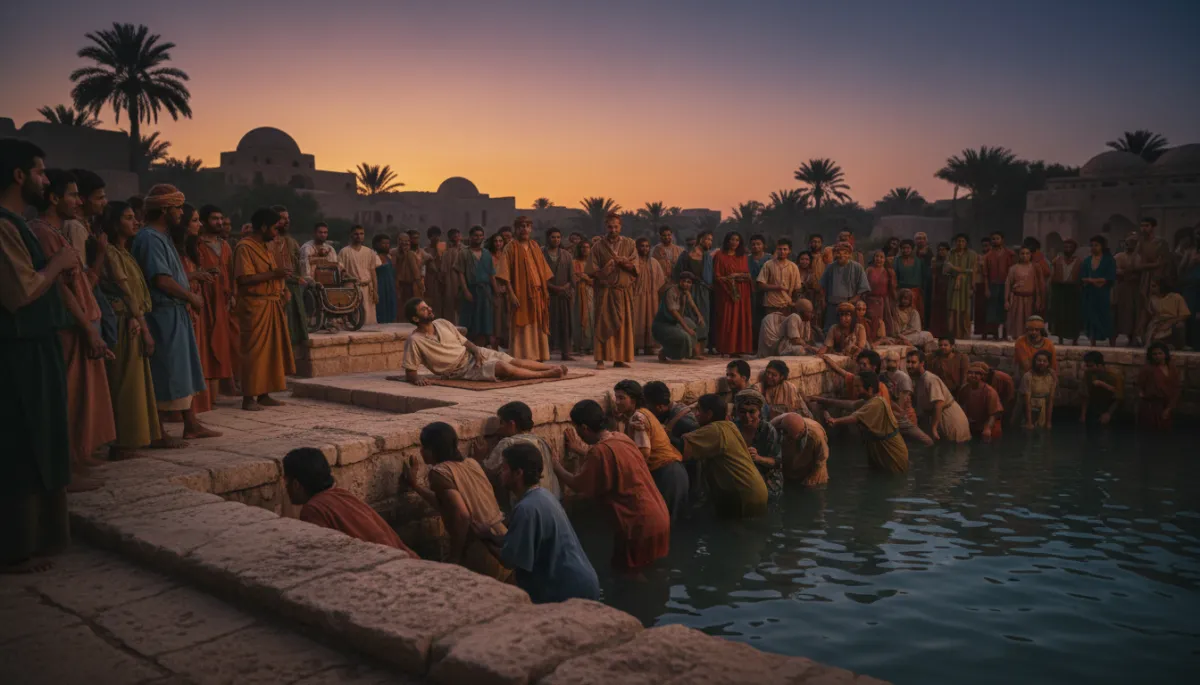
Systems built for the almost-strong quietly leave the weakest watching from behind.
Jesus does not help the man into the water. He does not reinforce the mechanism. He bypasses it entirely. For ministries and nonprofits, this is a hard word: sometimes faithfulness means refusing to strengthen a system that only works for those already halfway healed. It means bringing the miracle to the mat instead of demanding that the mat somehow drag itself to the miracle.
“Take Up Your Bed” — Carrying the Place That Carried You
Then comes the command: “Get up, take up your bed, and walk.” It would have been simpler if Jesus had said, “Leave the bed; you do not need it anymore.” But he does not. He tells the man to carry the very thing that once carried him. For anyone leaving prison, leaving the street, leaving addiction, this is the strange mercy and cost of healing. You do not erase the mat; you relocate it. The bed becomes testimony, not identity.
In our Ministry Prayer Life calls, we hear from men who have come home after decades and visit the old neighborhood, the old corner, the old cellblock as volunteers or mentors. They are walking, but they are still carrying their beds. Their past is not discarded; it is repurposed. Take Up Your Bed means: Do not pretend you were never here. Let the place you survived become part of the story you now offer others.

Healing does not erase your past; it reassigns it as a witness to others.
For nonprofits and communities, this phrase reshapes reentry and recovery work. To “take up your bed” is to empower people to return as agents, not as shadows. The man will walk back through temple courts that only knew him as the one on the ground. Now he comes standing, bed in hand, carrying visible proof that the old story is no longer the only story. When someone leaves a hard place and comes back to serve, we are called not to hide their history but to honor it as part of the ministry’s own testimony.
Ministry Insights from Prison Floors and Street Corners
Years of ministry inside prison walls and on the street have taught us that John 5 is not a distant story. The Pool Of Bethesda is any place where people gather around a rumor of change, waiting for a chance they are too tired to chase. The question “Do you want to be healed?” is the quiet voice on a late-night call to our prayer line. It is the outreach worker kneeling on the sidewalk asking, “Are you ready for something different?” It is the volunteer sitting in a plastic chair across from a man who has done 38 Years Struggle in and out of the system, asking not for his case file, but for his heart.
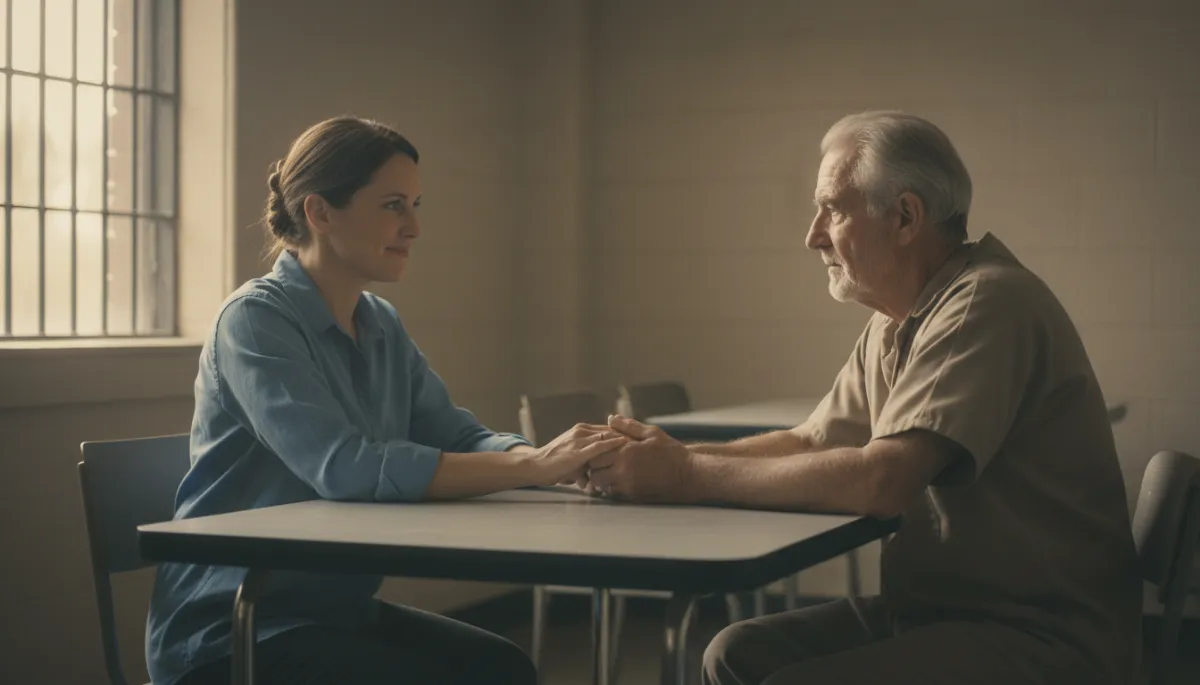
Real healing begins where someone risks asking about desire, not just need.
For organizations, the invitation is to design spaces that do three things:
Ask the honest question. Build programs that honor desire, not just deficits, and give people room to answer with more than “yes” or “no.”
Refuse cruel mechanisms. Examine where your systems reward those already strong and quietly leave the weakest at the edge of the water.
Honor the bed. Create roles for formerly incarcerated, formerly unhoused, formerly addicted people to serve as leaders, carrying their mats openly as signs of grace.
Walking With the Healer, Not Just Toward the Water
In the end, the man at the Pool Of Bethesda does not find healing by finally beating someone else to the water. He is met by a Person who steps over every rule of the mechanism and speaks to the core of his being. For nonprofits, churches, and community groups, this is our pattern. We are not angel-stirrers, managing a scarce pool of opportunity. We are companions of the One who still walks into hard places, still asks unsettling questions, still tells people to rise, Take Up Your Bed, and walk into communities that must learn to see them differently.
At Ministry Prayer Life, this is why we keep the line open at all hours. Somewhere, a man by a figurative pool is rehearsing his explanation again. Somewhere, a woman with decades behind bars is wondering if she dares to want more. Our calling—your calling as partners, volunteers, donors, and fellow communities—is to stand in those in-between places and echo the question that sounds cruel but is actually mercy: “Do you want to be healed?” Then, when the quiet yes finally surfaces, to be ready not with a mechanism, but with a hand, a path, and a people who will walk with them into the new address of grace.
If your heart is stirred by this John 5 Teaching, consider how you might join this work. Call our 24/7 prayer line, submit a prayer request for someone still lying by their own pool, volunteer with a local outreach, or donate to sustain ministries that refuse to leave the weakest at the edge. Healing is not a private event; it is a community learning to recognize the ones who now walk among us, beds on their shoulders, carrying stories we cannot afford to ignore.