Healing Through Faith: Jesus and the Untouchable
Faith, Prayer, Community, Healing
When Jesus Touched the Untouchable: Mark 1:40–45 and the Wounds of Isolation
In a brief encounter between Jesus and a man with leprosy, Scripture opens a window into what enforced isolation does to a soul—and how the willing touch of Christ restores more than skin. For those in prison cells, on street corners, or quietly suffering alone, this story still speaks with tender power.
“If You Will”: The Question of a Wounded Identity
Mark 1:40–45 tells us, “A leper came to him, imploring him, and kneeling said to him, ‘If you will, you can make me clean.’” Notice the order of his words. He does not doubt Jesus’s power. “You can” is settled in his mind. What he is unsure of is Jesus’s heart: “If you will.”
Years of prison ministry and homeless outreach through ministries like Ministry Prayer Life have shown that this is the deeper wound of isolation. Most people we meet have heard that God is powerful. They grew up with stories of miracles, or at least with the idea that God can do anything. But after enough rejection, betrayal, and abandonment, the question shifts from “Can God?” to “Would God ever want to do that for someone like me?”
That is the question of a person who has been pushed outside the camp. It is the question of the man whose family stopped visiting, the woman whose addiction cost her every relationship, the person on the street who has learned that people look away when they walk by. Enforced isolation does not only remove you from others; it slowly convinces you that you are not worth coming close to. Identity erodes until you begin to believe you are your disease, your sentence, your failure, your label.
What Enforced Isolation Does to the Sense of Self
In the ancient world, leprosy meant more than a medical diagnosis; it meant mandatory distance. Lepers lived outside the community, cut off from touch, worship, and normal conversation. They had to shout “Unclean!” as a warning, as if their entire identity had been reduced to a single word of contamination. Over time, that kind of life doesn’t just affect your body—it reshapes how you see yourself before God and others.
In a prison block, I have seen something similar. A man may start his sentence knowing he made a terrible choice, but after years of being known only by his number and his crime, he begins to believe he is that crime. In homeless outreach, a woman may begin by saying, “I lost my job and then my apartment,” but after enough nights on the street she simply says, “I am a homeless person,” as if that is all there is to her story. Isolation compresses the soul into a label. It whispers, “This is all you are now.”
That is why the leper comes on his knees, not bargaining, not demanding, but imploring. His body carries disease, but his heart carries a deeper question: “Am I still someone You would want?” When he says, “If you will,” he is really asking, “Is there any part of You that wants me back inside the circle of the clean, the loved, the seen?”
💡 Gentle Reminder: If you find yourself asking God, “Would You ever want someone like me?”, you are already standing where this leper stood—and Jesus’s answer to him is His answer to you.
When Cleanness Becomes Contagious: The Direction Reverses
Under the law, uncleanness was always the stronger force. If something clean touched something unclean, the clean thing became unclean. Contamination flowed one way—from the broken to the whole, from the diseased to the healthy. That is why lepers were kept at a distance; their condition was considered dangerously contagious, not only medically but spiritually and socially.
But in Mark 1, something revolutionary happens. Jesus, moved with compassion, stretches out His hand and touches the man. By every rule, Jesus should become unclean. Instead, the opposite occurs: “Immediately the leprosy left him, and he was made clean.” For the first time, cleanness is the contagious reality. Wholeness proves more powerful than ruin. In Jesus, holiness doesn’t retreat from brokenness; it overwhelms it, absorbs it, and transforms it.
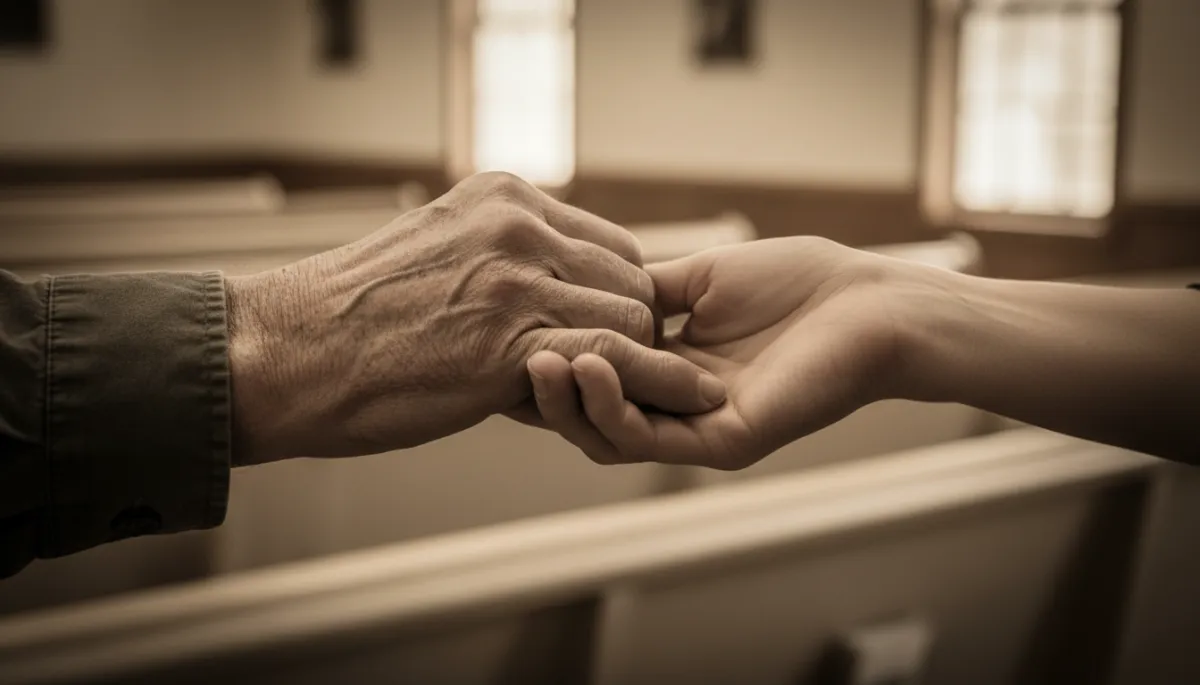
In Christ, healing moves toward the hurting, making wholeness more contagious than shame.
This is what we witness when someone calls the 24/7 prayer line at Ministry Prayer Life from a jail phone or a shelter cot. They expect their story to stain the conversation. They brace for the moment when we will quietly pull back. But the gospel runs the other way. The presence of Jesus in the conversation moves toward their pain, not away from it. Their shame does not contaminate His holiness; His holiness begins to reframe their shame. The direction of “cleanness” has been permanently reversed in Him.
God’s Willingness Was Settled Before the Healing
When the leper says, “If you will, you can make me clean,” Jesus answers with two simple words that change everything: “I will.” Then He adds, “Be clean.” The order matters. The declaration of God’s heart comes before the demonstration of His power. The willingness is settled before the healing arrives.
Many of us reverse that in our thinking. We wait to see if the circumstances change, if the sickness lifts, if the door opens, and only then do we decide whether God must have been willing. But in this story, Jesus reveals that His heart is not shaped by the outcome; His willingness flows from who He is. Compassion is not a mood He occasionally feels; it is a core part of His identity.
For the man with leprosy, those words—“I will”—heal something before his skin ever clears. They answer the question that isolation carved into him: “Am I still wanted?” When we pray with someone through Ministry Prayer Life, our first calling is often the same: to help them hear again, through Scripture and the Spirit, that God’s willingness to love, forgive, and draw near was settled at the cross long before today’s crisis. The outcome of this specific situation may unfold in ways we do not control, but the heart of God toward them is not in doubt.
📌 Key Takeaway: The cross is God’s eternal “I will” to a world convinced it is too unclean to touch. Your story does not rewrite His willingness.
Why Jesus Sent the Man to the Priest: Healing Community Standing
After the miracle, Jesus does something that might seem almost anticlimactic. He “sternly charged him and sent him away at once, and said to him, ‘See that you say nothing to anyone, but go, show yourself to the priest and offer for your cleansing what Moses commanded, for a proof to them.’” The man’s body is already healed. Why send him to the priest?
Because Jesus is not content to restore this man privately while leaving him exiled publicly. In that culture, the priest was the gatekeeper of community life. Only the priest could officially declare a former leper “clean” and restore his right to worship in the synagogue, to live inside the village, to be fully seen as a member of God’s people again. Jesus cares about more than personal spirituality; He cares about community standing, about the man’s place at the table and in the pews.
In modern terms, Jesus is saying, “I don’t just want you to know this in your heart; I want the community to recognize it too. I want the systems and structures that labeled you ‘unclean’ to acknowledge what God has done.” For someone coming home from prison, that might look like a church that welcomes them as a brother or sister, not a permanent suspect. For someone stepping out of homelessness, it might look like being known by their name instead of their condition, given real roles and relationships rather than charity from a distance.
Touch, Not Just Words: Why Jesus Came Close
Jesus could have healed the leper with a word spoken across the road. He had already healed others from a distance. But here, He chooses to touch. For a man who may not have felt a human hand on his skin for years, this is not a small detail. The first thing he feels is not his own body changing, but the warmth of another person breaking the taboo of distance. Jesus’s touch says, “I am not afraid of what you carry. I am not calculating the risk of being near you. I am here, with you, as you are.”
In ministry among the incarcerated and unhoused, we have learned that presence often speaks louder than any sermon. Sitting on the edge of a bunk bed, kneeling beside someone’s cot at a shelter, or answering a midnight phone call on the prayer line—these are modern echoes of that touch. They say, “You are not too unclean for us to come near. And if we, imperfect as we are, can come close, how much more can Christ?”
Living Out the Touch of Christ Today
Mark 1:40–45 is not just a beautiful story from long ago; it is a pattern for how the Church is called to live now. We are invited to move toward those the world keeps at arm’s length, to believe that in Christ, wholeness is more contagious than ruin, and to participate in restoring both hearts and community standing. That might look like volunteering in a jail ministry, serving meals at a shelter, or simply refusing to let the labels of someone’s past define how you treat them today.
💡 Pro Tip for the Heart: Ask God to show you one person this week who feels “outside the camp,” and then take one small, concrete step to move toward them with listening, prayer, or practical help.
When You Feel Like the Leper: An Invitation
If you see yourself in this story—if you feel exiled by your past, your mistakes, your diagnosis, or your circumstances—hear again the leper’s prayer and Jesus’s answer. You are allowed to come to Him honestly, even haltingly, and say, “If You will, You can make me clean.” And in the light of the cross and the empty tomb, you can trust that His heart has not changed. His willingness is not fragile. His holiness is not threatened by your uncleanness. In Him, cleanness still moves toward the unclean, and touch still reaches across every distance we thought was permanent.
At Ministry Prayer Life, we exist to echo that truth in practical, personal ways. Our 24/7 prayer line is one small extension of the hand of Christ—a way for you to reach out from wherever you are, at whatever hour, and find someone ready to listen, pray, and remind you that you are not forgotten. Whether you need prayer, want to volunteer, or feel led to support this work so others can be reached, you are invited into the story of the God who still says, “I will. Be clean.”
You are more than the label the world has given you. You are seen, wanted, and welcome to draw near to the One who crosses every boundary to touch the untouchable—and to bring them home.