Rethinking the Widow's Two Coins: Faith & Generosity
Faith, Generosity, Ministry Prayer Life
When the Smallest Gift Weighs the Most: Rethinking the Widow’s Two Coins
In a crowded temple full of noise, wealth, and religion, Jesus paused for the gift no one else could hear. Two coins, almost weightless in the hand, hit the bottom of the offering box, and He said it was the largest gift of the day. Not because of what hit the box, but because of what did not go back into her pocket.
The Arithmetic Heaven Uses
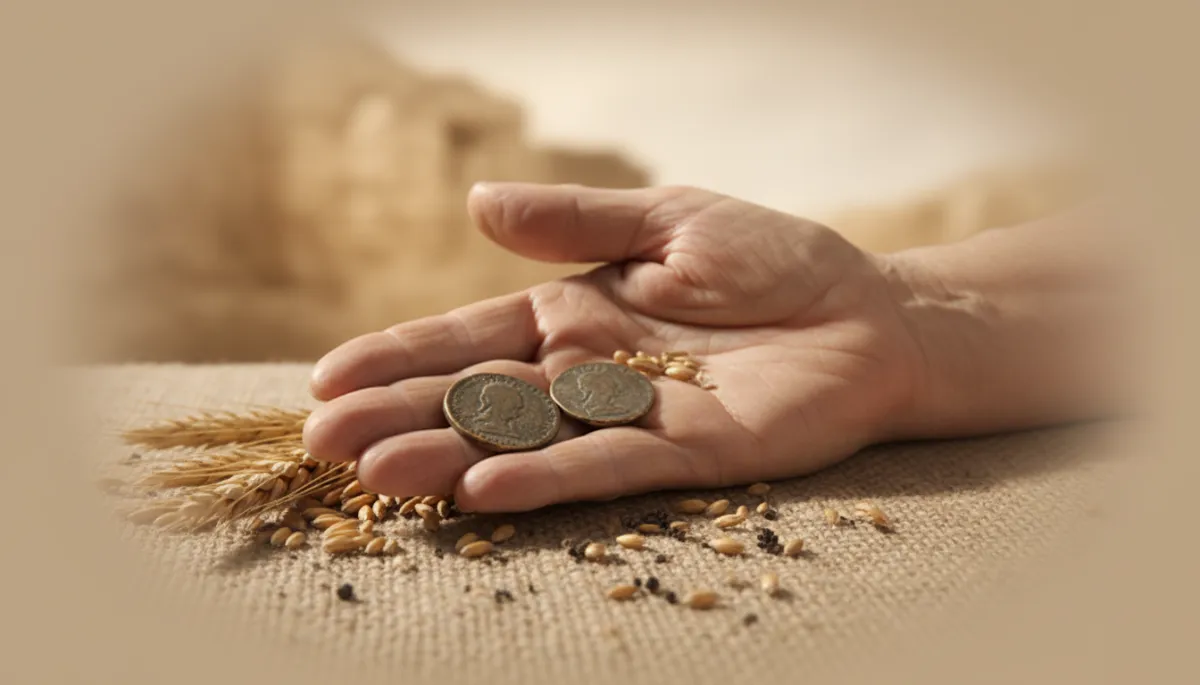
Mark tells it simply: rich people came, one after another, putting in large sums. The kind of giving that makes boxes ring and heads turn. Then a widow came, carrying what the text calls two very small copper coins, worth almost nothing. She lets them go, and Jesus calls His disciples over like a teacher stopping class for a lesson that can’t wait.
His verdict is unsettling: “She has put in more than all the others.” Not more than some of them. More than all of them. How? Because Jesus is not adding up what goes in. He is measuring what stays behind. The rich, He says, gave out of their surplus. They gave from the part of their life they could afford to lose. She gave out of her poverty and “put in everything—all she had to live on.”
Heaven’s arithmetic is not: Gift = Amount Given. It is closer to: Gift = What Remains After. The kingdom weighs the gap, the ache, the risk. It counts the nights of uncertainty, the empty pantry, the bus ticket you no longer have money for, the dignity you risk when you say, “I don’t know how we’ll make it, but I’m giving this anyway.”
💡 Quiet Kingdom Math: God does not ignore small gifts; He attends to costly ones—especially when the cost is hidden from everyone but Him.
She Gave Everything to a Failing House
There is another detail, one we would rather not look at. The chapter does not start with the widow. It starts with Jesus exposing the religious system that took her offering. Just a few verses earlier He says the scribes “devour widows’ houses.” Just a few verses later He predicts that not one stone of this temple will be left on another. The building she funded with her last two coins was already marked for demolition in heaven’s plans.
She gave everything to an institution that had failed her, and that was about to fall. The leaders were unjust. The system was compromised. The structure was temporary. Yet Jesus does not tell her to take her coins back. He does not say, “Wait for a better board, a more transparent budget, a cleaner track record.” He simply honors her. He calls her gift great even as He calls the institution doomed.

God can honor the giver even when the structure they gave to is collapsing.
This is a hard comfort, but a real one. The worth of her offering does not depend on the worthiness of the institution. The holiness of her sacrifice is not canceled by the corruption of the system. Her coins are not wasted because the building is temporary. Her story is preserved while the stones are scattered.
For Those Who Gave Years to Something That Broke
Many who call Ministry Prayer Life have this same ache, spoken in different words. “I gave my twenties to that church.” “I poured my savings into that ministry.” “I stayed faithful to that leader, that job, that project, long after it stopped being faithful to me.” The institution changed. The leadership failed. The dream folded. And you are left with empty hands and a question: Was it all wasted?
The widow’s story does not promise that every structure will stand. It does not promise that every leader will be safe, every board pure, every ministry wise. It promises something else: God keeps separate books. He records your sacrifice in a ledger that is not erased when human plans fail. You may have given to a house that cracked, but you gave through that house to a God who does not crumble.
📌 Key Takeaway: The collapse of what you served does not erase the love with which you served it.
If you poured years into something that did not steward you well, Jesus does not stand with the system that hurt you; He stands beside you at the offering box. He does not say, “Why did you give so much?” He says, “I saw. I counted differently. I will not forget.”
Ministry Among Those Who Own Almost Nothing and Give Most
Over years of ministry, many of us at Ministry Prayer Life have sat on worn-out couches, plastic chairs, and hospital beds with people who resemble this widow more than the wealthy in the story. They own almost nothing. Yet they give like it is the only language they know. They bring food to neighbors when their own cupboards are thin. They tithe from disability checks. They volunteer hours they cannot spare. They pray for others while their own hearts are breaking.
I have watched a woman in a one-room apartment set aside a small envelope labeled “for the Lord” weeks before the due date of her rent. I have heard a man say, “I can’t give much, but I can give time,” and then show up every day to serve in ways no one else wanted. These are not stories we tell to romanticize poverty. They are stories that sound like the clink of two coins in a crowded temple—barely audible, but thunderous in heaven.

In hidden rooms and quiet corners, God weighs gifts the world never sees.
When we answer the 24/7 prayer line, we hear the tremor in voices that say, “I gave, and now I don’t know how I’ll make it.” We do not rush to fix the math. We sit in the mystery with them, trusting that the same Jesus who watched the widow still watches today. The ministry we offer—prayer, listening, presence—is our own small set of coins, laid where we cannot control the outcome, trusting that God will meet people in ways we cannot script.
When You Have Almost Nothing Left
Maybe you are reading this with a kind of holy exhaustion. You have given love to someone who did not return it. You have given loyalty to leaders who did not protect you. You have given time to a cause that seems to have stalled, or money to a project that never became what you hoped. You are standing outside a temple that looks sturdy but feels hollow, wondering what to do with the little you have left inside you.
Hear this: Jesus does not shame the widow for having nothing left. He honors her for trusting God with the last of what she had. The story does not tell us what happened next. It does not resolve the tension. That silence is part of its truth. Sometimes, the miracle is not that the coins return multiplied the next morning. Sometimes, the miracle is that your life is seen, named, and held by the One who counts differently than everyone around you.

God meets us in the emptiness that remains after we have given our all.
An Invitation to Bring Your Story
At Ministry Prayer Life, we live in this story every day. We listen to modern widows and widowers of all kinds—those who have lost spouses, churches, communities, dreams. We do not always have answers, but we believe this: nothing you surrendered in love is lost in God. The coins you dropped in faith, the years you gave in service, the nights you spent praying when no one else knew—He has not misplaced a single one.
If this story touches something raw in you, you do not have to sit with it alone. You can call our 24/7 prayer line at any hour. You can submit a prayer request when words are hard to find. You can even choose to volunteer or give—not because institutions are perfect, but because God is faithful, and because shared prayer can hold what individual hearts cannot carry by themselves.
🕊 A Gentle Next Step: If you feel like your two coins are all you have left—your last bit of hope, trust, or courage—reach out. Let someone from Ministry Prayer Life stand beside you as you place them in God’s hands.
The least noticeable gift of the day became the story that still travels the world. Not because it changed the temple, but because it revealed the heart of God. He is still watching the quiet corners. He is still counting what is left, not just what is given. And He is still calling the smallest, most costly offerings the largest of all.