Silent Prayers: 1 Samuel's Lesson on Faith
Faith, Prayer, 1 Samuel, Ministry Prayer Life
Staying at the Doorpost: When Prayer Looks Silent in 1 Samuel 1
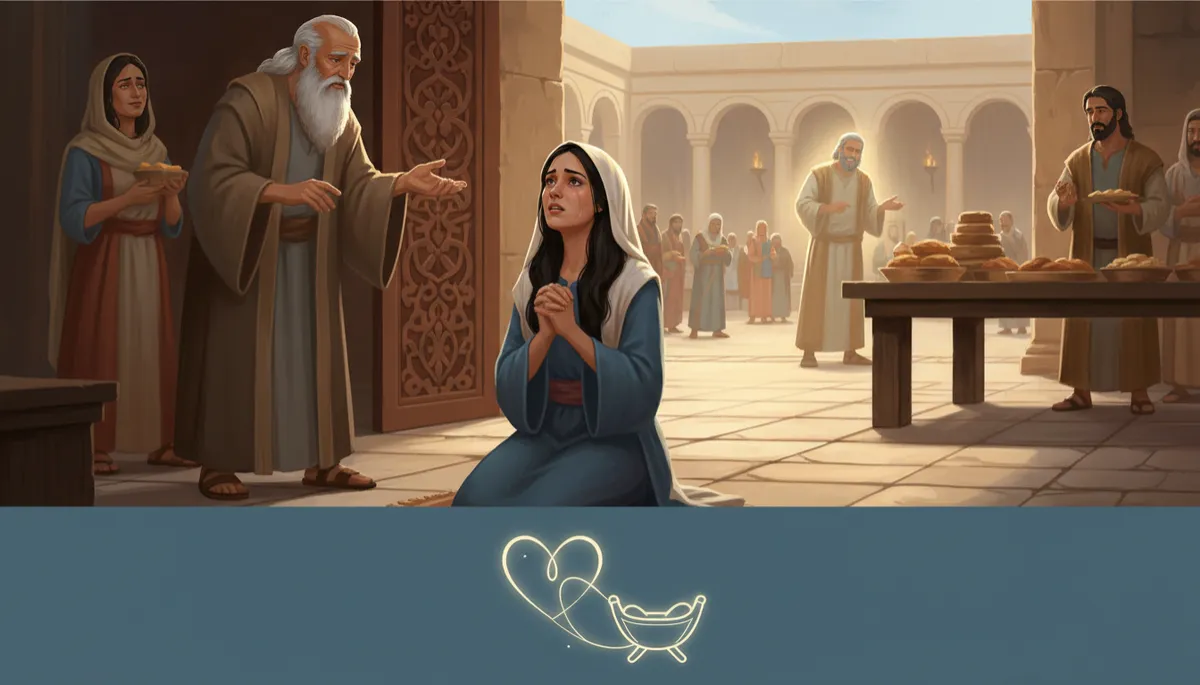
Her lips are moving, but no sound is coming out. Across the room, a priest watches her shoulders tremble and comes to a conclusion that feels like another wound: she must be drunk. This is where 1 Samuel 1 slows us down—not at the miracle of a long-awaited child, but at the doorway of the house of God, where a woman prays a prayer no one else can hear. For anyone who feels like words have stopped working, this is holy ground.
The Pilgrimage That Reopens the Same Wound
Every year, Elkanah took his family to Shiloh to worship and sacrifice. For many in Israel, this annual pilgrimage was a highlight—a reminder of covenant, community, and celebration. But for Hannah, it also reopened the same wound in the same place, year after year. The journey itself carried memories: the songs, the road, the familiar stopping points. Each step whispered what had not changed. Still no child. Still an empty place at the table. Still prayers that seemed to echo back unanswered.
Many people who reach out to Ministry Prayer Life know this feeling well. Holidays, anniversaries, and “special” days can highlight what is missing more than what is present. The very traditions meant to comfort can become reminders of what has not yet healed. Hannah’s story gives language and dignity to that ache; the Bible does not rush past it or clean it up. It lets the annual return to the same pain stand in the light of God’s attention.
A Rival’s Provocation and a Public Accounting of Lack
At the very place of sacrifice—where offerings were meant to rise as worship—Hannah faced something deeply personal. Peninnah, her rival, used the timing of the sacrifice to provoke her. The text says she did this “year by year,” especially “as often as she went up to the house of the Lord.” In other words, the place that should have been safest became the stage for comparison and cruelty. Peninnah had children; Hannah did not. Peninnah had visible proof of blessing; Hannah had invisible prayers and empty arms.
Then came the portions. Elkanah handed out pieces of the sacrifice to his wives and their children. It was an act of care, but it also became a kind of public accounting of what Hannah did not have. Each portion to each child was a silent announcement: “Here is another life Peninnah has that you do not.” Scripture tells us Elkanah gave Hannah a “double portion” because he loved her, but even that generous act could not erase the ache. Love does not always cancel longing. Sometimes it makes the longing feel even more complicated.
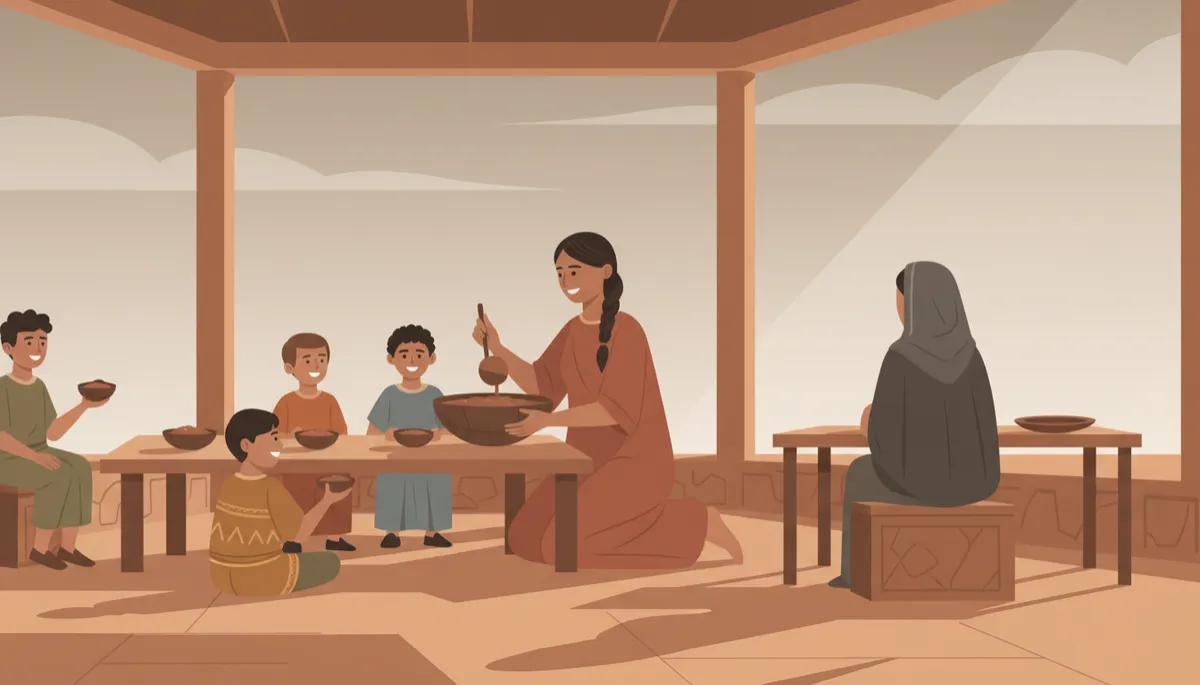
Sometimes the most ordinary moments become loud reminders of what is missing.
A Husband’s Love and the Grief That Will Not Be Talked Away
Elkanah genuinely loved Hannah. Scripture makes a point of telling us that. He saw her weeping, not eating, and he tried to comfort her: “Hannah, why do you weep? And why do you not eat? … Am I not more to you than ten sons?” His words were not cruel. They were the language of someone who wants to be enough for the one they love, who feels helpless in the face of a pain they cannot solve. He offered himself as the reason her grief should stop—his love, his presence, his commitment.
Many of us know both sides of that exchange. We have been Hannah, unable to make someone else’s love cancel our sorrow. We have been Elkanah, wanting to fix what cannot be fixed with words. The Bible does not mock his attempt or dismiss his love, but it also does not pretend that his affection ends her ache. There are griefs that require more than human reassurance. There are longings that sit before God even while we sit beside people who love us deeply.
The Doorpost, the Silent Lips, and the Prayer No One Could Hear
After the meal, “Hannah rose.” She went to the house of the Lord, “deeply distressed,” and “prayed to the Lord and wept bitterly.” This is where we meet her at the doorpost. Her lips are moving, but her voice is not heard. The text is so specific about this detail that we are meant to notice it. This is not a polished public prayer. It is not a carefully crafted speech. It is the kind of prayer you pray when you have run out of sentences, when grief has pushed past language into groans and tears and half-formed phrases.
Eli, the priest, watches her from his seat. He sees the shaking, the silent mouth, the intensity, and he draws the wrong conclusion. “How long will you go on being drunk? Put your wine away from you.” It is a painful misreading, especially in a holy place. Yet even here, Scripture is gentle. Eli is not painted as a villain, and Hannah is not shamed into silence. She answers with honesty and dignity: “No, my lord, I am a woman troubled in spirit… I have been pouring out my soul before the Lord.”
The misjudgment at the door is real, but it is also quickly corrected. As soon as Eli understands, he moves from accusation to blessing: “Go in peace, and the God of Israel grant your petition that you have made to him.” In a few sentences, the scene shifts from misunderstanding to affirmation. If you have ever felt misread in your pain—by church, by family, by leaders—Hannah’s story offers a tender reminder: human perception can be wrong, but God’s reception of your heart is not. He heard the prayer no one else could hear.
💡 Gentle Reminder: If others have misread your tears or your silence, it does not disqualify your prayer. God is not confused about what is happening in your heart.
A Vow That Asks to Give Back What She Asks For
At the center of Hannah’s silent prayer is a vow that is as startling as it is beautiful. She asks for a son so that she can give him back: “O Lord of hosts, if you will indeed look on the affliction of your servant… and give to your servant a son, then I will give him to the Lord all the days of his life.” This is not a bargain from a distance; it is a surrender from up close. She longs for a child, but she does not imagine that child as a possession. She imagines him as a gift entrusted, then returned.
This does not mean that if we really trust God, we will always vow to give up what we ask for. Rather, it reveals what happens when desperation and faith meet: our prayers begin to move from “make my life work” to “make my life Yours.” Hannah is not trying to manipulate God; she is aligning herself with His purposes, even in her deepest longing. For those who call our 24/7 prayer line at Ministry Prayer Life, this is often where God gently leads over time—not away from the desire, but into a deeper trust that even the answer belongs to Him.
When You Think You’ve Stopped Praying
One of the most tender gifts of 1 Samuel 1 is this: Hannah’s prayer looks, from the outside, like something it is not. To Eli, it looks like drunkenness. To some of us, our own season may look like we have stopped praying. The words have dried up. We do not know what to say anymore. We sit in church and feel the songs catch in our throats. We lie awake at night and find only sighs where sentences used to be. It can feel like failure: “I used to know how to pray. Now I just sit here and feel.”
But Hannah’s moving lips and unheard voice remind us that prayer is not measured by volume or vocabulary. It is measured by direction. She is pouring out her soul to the Lord, even when no one else can hear a single word. If you are turning your ache toward God—even in silence, even in confusion—you have not stopped praying. Your heart is speaking a language the Holy Spirit understands perfectly. Romans 8 tells us He intercedes “with groanings too deep for words.” Heaven is fluent in wordless prayers.
📌 Key Takeaway: You may feel done with words, but God is not done with you. Silence in your mouth does not mean silence in your spirit.
The Turning Point Before Anything Changes
After Eli blesses her, something quiet but profound happens. The text says, “Then the woman went her way and ate, and her face was no longer sad.” This is the verse we often rush past to get to the pregnancy, the birth, the miracle. But pause here. At this moment, nothing in Hannah’s circumstances has changed. There is no positive test, no swelling belly, no visible sign that her request has been granted. The rival still has children. The annual pattern has not yet been broken. And yet, she eats. Her face is different.
This is the doorpost miracle we often overlook: the shift from crushing heaviness to a quiet settledness while everything on the outside remains the same. It is not denial. Her longing has not disappeared. But something has transferred—from her shoulders to God’s hands, from her control to His care. She has poured out her soul, been seen, been blessed, and now she walks back into the same life with a different countenance. Sometimes the first answer God gives is not the thing we asked for, but the capacity to eat again, to lift our face, to breathe in hope where there was only despair.
Staying at the Doorpost with You
1 Samuel 1 does eventually take us to Samuel’s birth, to dedication, to a mother leaving her long-awaited son in the house of the Lord. But if we rush there, we miss the comfort meant for those who are still at the doorpost—still waiting, still misunderstood, still praying prayers no one else can hear. At Ministry Prayer Life, we believe God meets people right there, before the circumstances shift, before the story resolves. Our calling is to sit with you in that doorway, to hold your story gently, and to bring your silent and spoken prayers before the Lord who already hears them.
If you feel like your lips are moving but nothing is coming out—if the yearly return to the same pain has worn you thin—you do not have to stand at the doorpost alone. You can call our 24/7 prayer line, submit a prayer request, or even partner with us as a volunteer or donor so that others can find this same support. Together, we can linger in this sacred in-between, trusting that the God who met Hannah in her silent, trembling prayer is the same God who leans close to you now.
Before anything changes on the outside, may God grant you this Hannah-sized grace: to rise, to eat, and to find that, somehow, your face is no longer as sad—because your story has been heard by the One who never misjudges your heart.